Nº01
Great Mosque of Uqba
Founded in 670 CE, the oldest mosque in the Maghreb and the architectural blueprint of Western Islam.
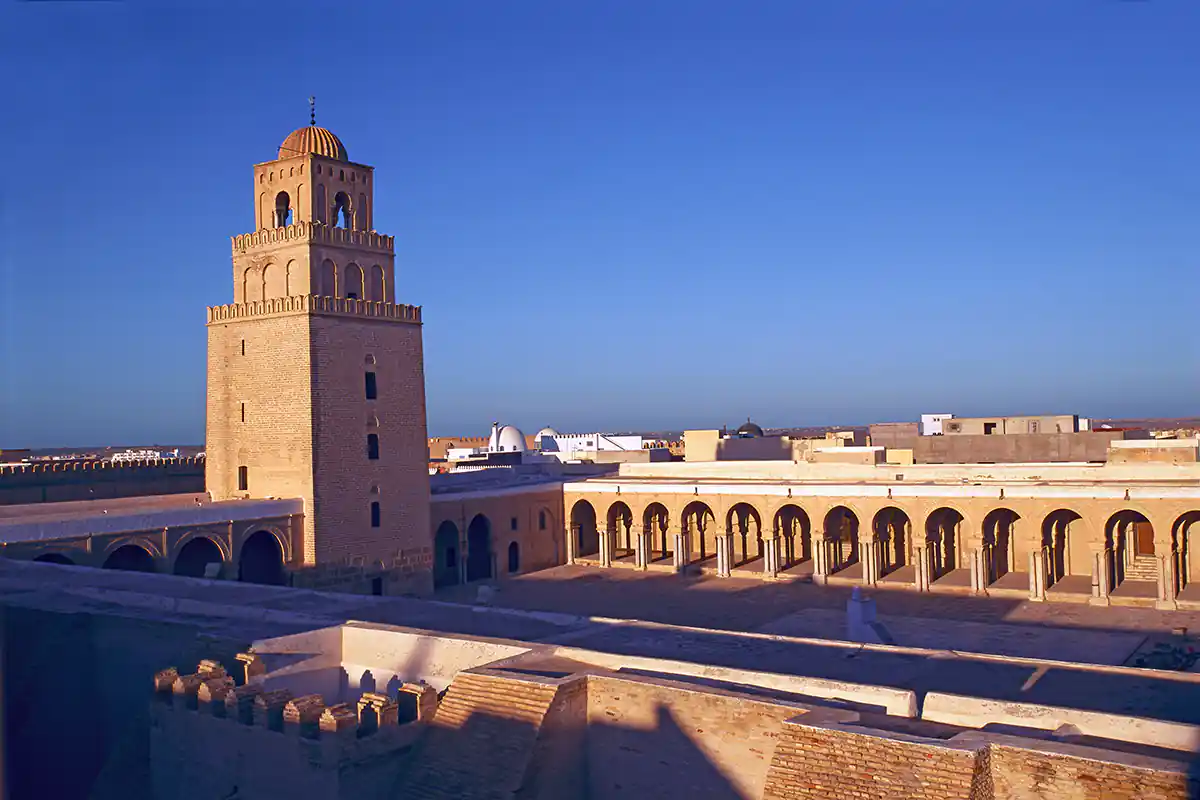
Islam's fourth holy city, Aghlabid jewel of the Maghreb
Founded in 670 CE by Uqba ibn Nafi, Kairouan is the fourth holiest city of Islam and served as the capital of the Aghlabid dynasty in the 9th century. Its medina, a UNESCO World Heritage Site since 1988, shelters the Great Mosque of Uqba — the oldest in the Maghreb — alongside the celebrated Aghlabid basins and the Zaouia of Sidi Sahbi. The city is world-renowned for its hand-knotted carpets and for makroudh, the signature date-filled semolina pastry. Lying in the inland heart of Tunisia, about 156 km south of Tunis, Kairouan makes an ideal base for exploring the country's central interior from the coastal resorts of the Sahel.
What It's Known For
Founded in 670 CE, the oldest mosque in the Maghreb and the architectural blueprint of Western Islam.
Inscribed on the World Heritage list in 1988, the medina preserves intact ramparts, souks and Aghlabid palaces.
Kairouan is the cradle of the Tunisian knotted carpet, whose geometric patterns are recognised worldwide.
Diamond-shaped semolina parcels stuffed with dates and steeped in honey, Kairouan's pastry pride since Aghlabid times.
Must-See Landmarks
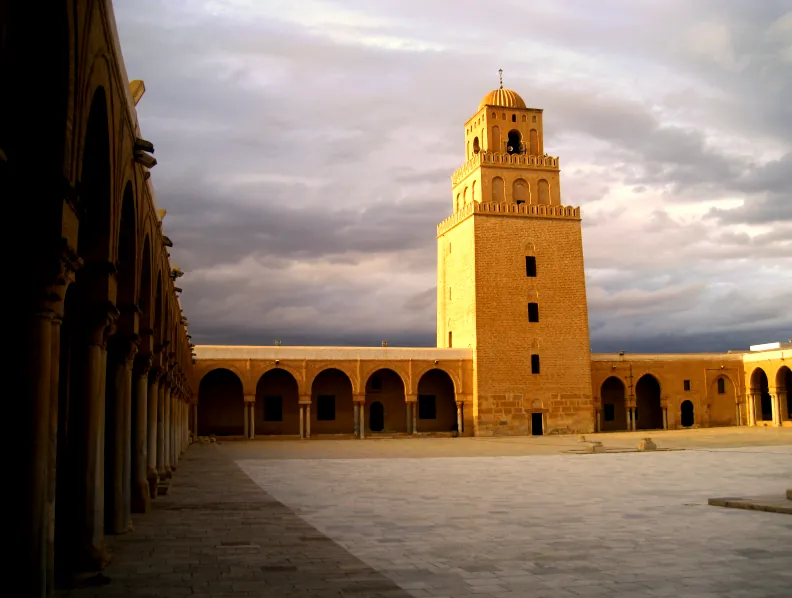
Founded in 670 CE by Uqba ibn Nafi and rebuilt by the Aghlabids in the 9th century, it is the oldest mosque in the Maghreb and a UNESCO-listed masterpiece of Islamic architecture.
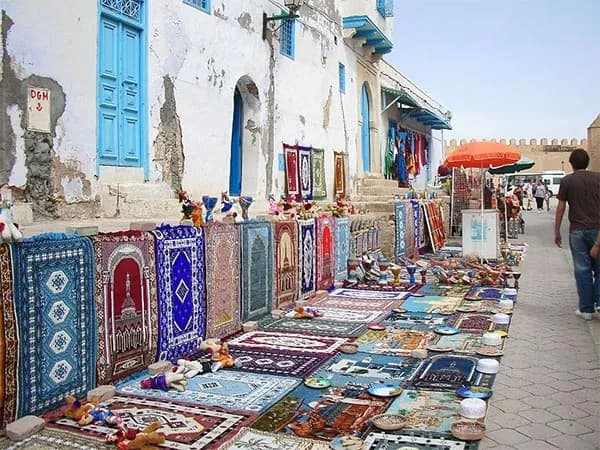
Inscribed on the UNESCO World Heritage list in 1988, the walled medina unfolds its souks, fondouks and traditional houses around the Great Mosque.
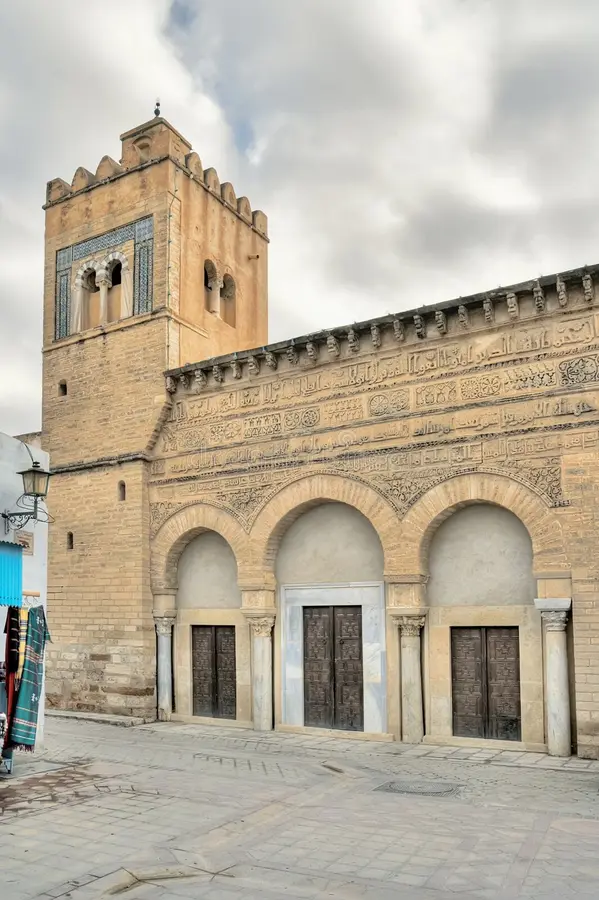
Built in 866 CE by Muhammad Ibn Khairun al-Andalusi, it bears the oldest sculpted façade in Islamic architecture, decorated with Kufic inscriptions and floral motifs.
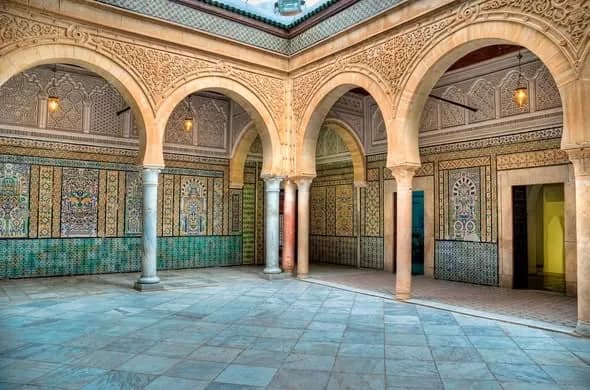
A 17th-century Muradid complex housing the tomb of Abu Zama'a al-Balawi, companion of the Prophet, renowned for its polychrome tilework and carved stucco.
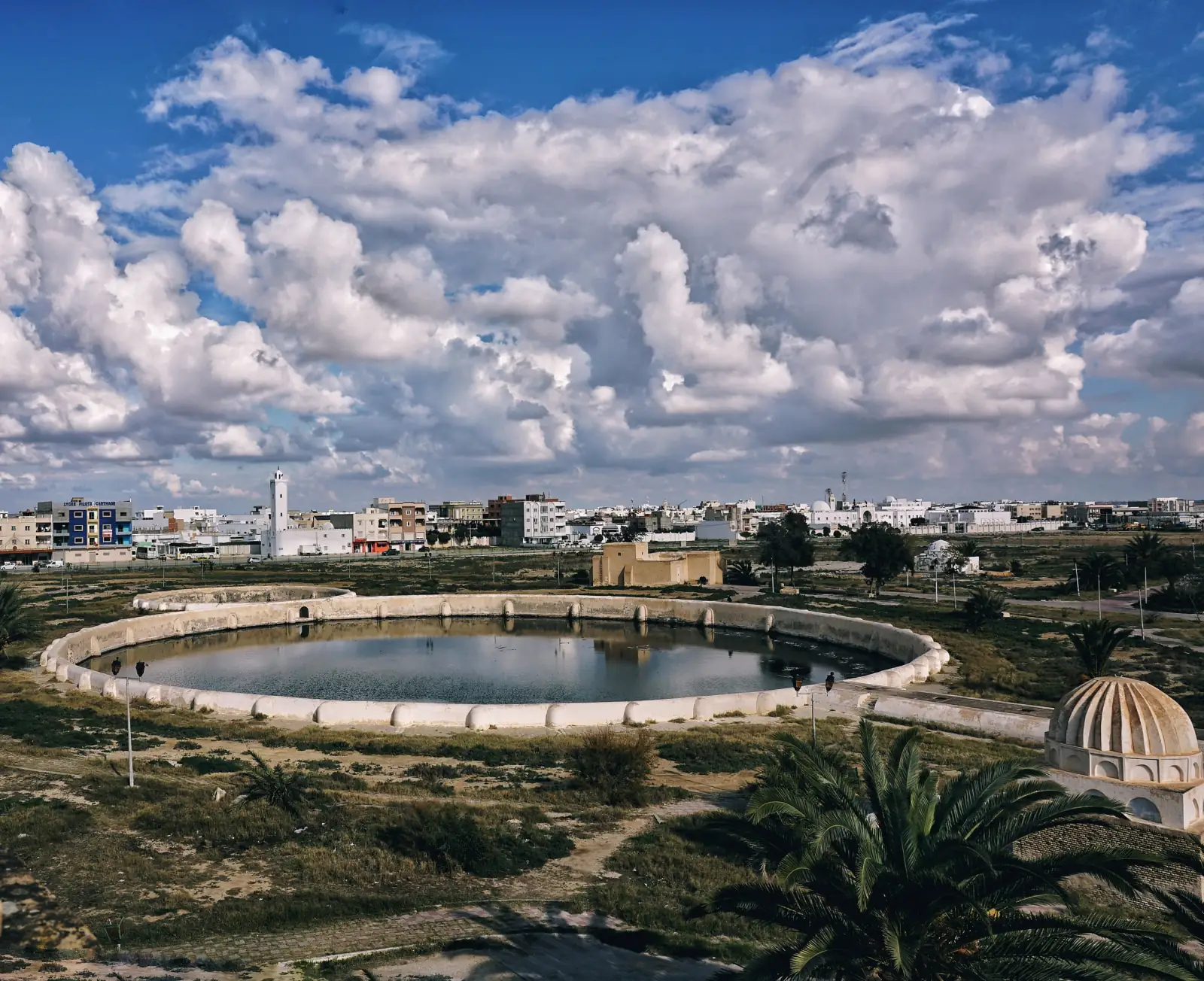
Built between 860 and 862 CE under emir Abu Ibrahim Ahmad, these two polygonal reservoirs — the larger 128 m across — are a pinnacle of medieval Islamic hydraulic engineering.
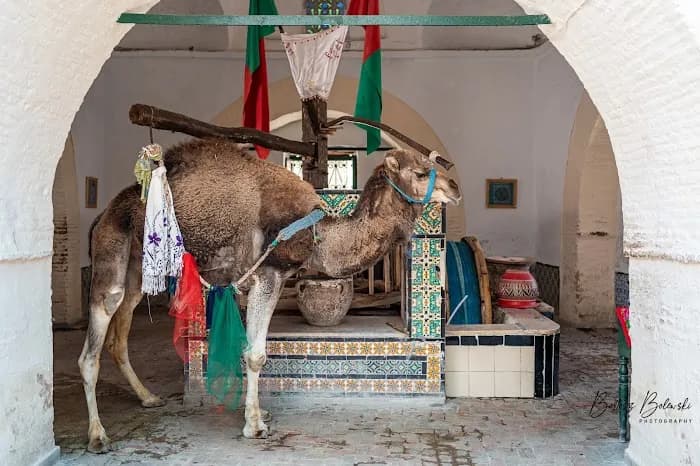
A 17th-century domed building enclosing an 8th-century well whose water, traditionally raised by a camel-powered wheel, is said to be linked to the Zamzam well in Mecca.
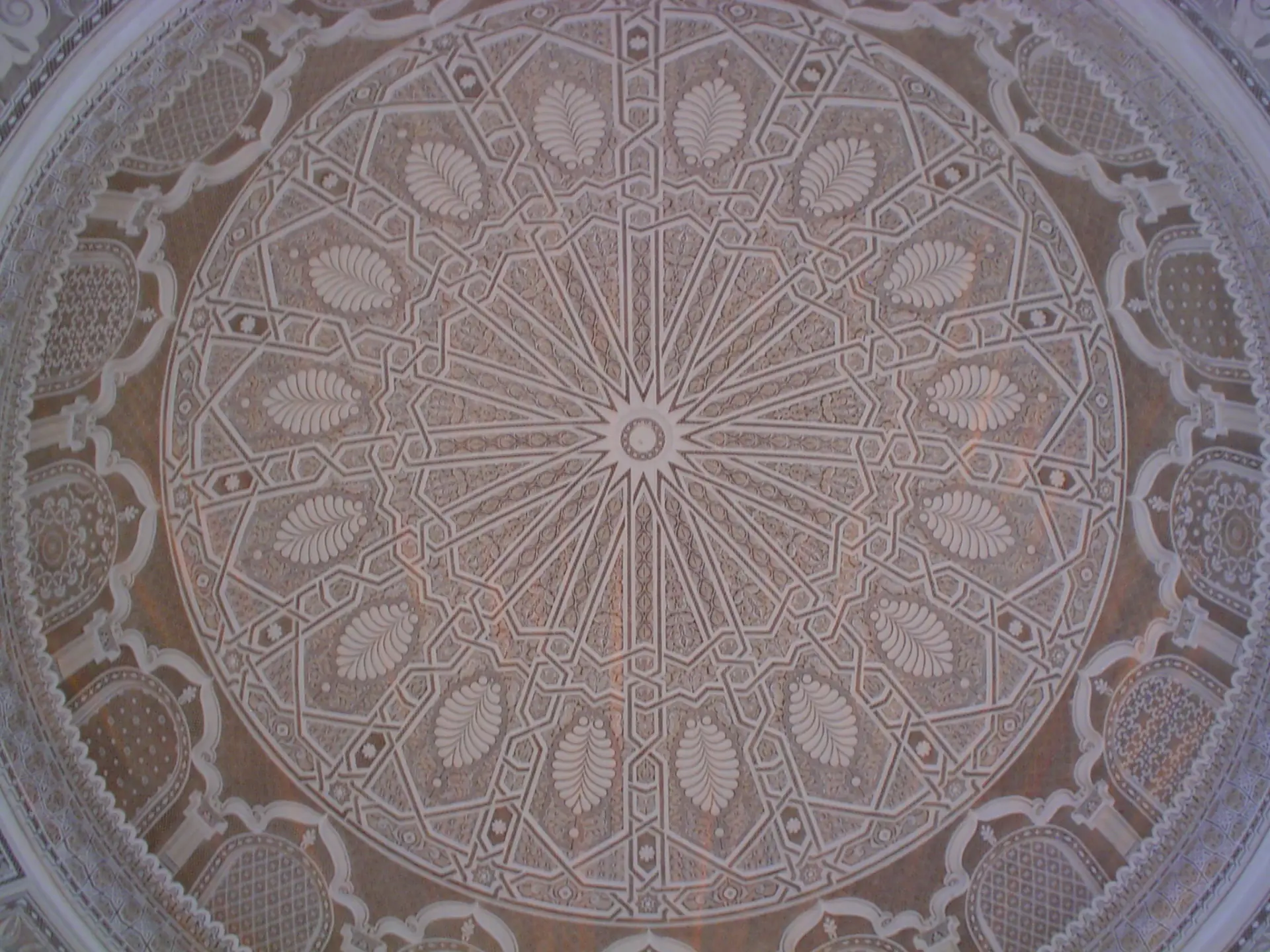
Set in a former presidential palace 10 km south of Kairouan, the museum displays Aghlabid ceramics, coins and manuscripts, including folios of the famed Blue Qur'an.
Local flavors
Traditional dishes you must try
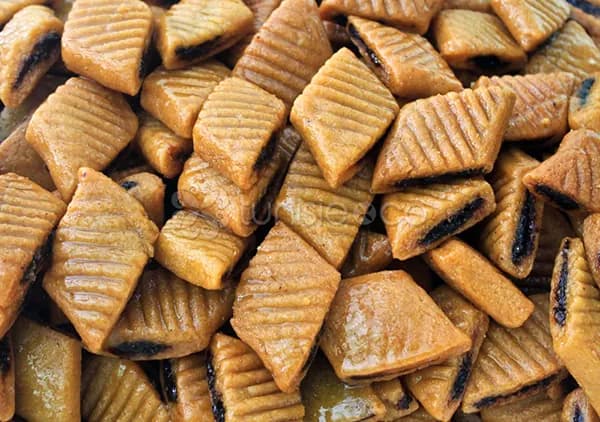
Diamond-shaped semolina pastry filled with date paste and orange-blossom water, fried then soaked in honey — Kairouan's signature sweet since Aghlabid times.
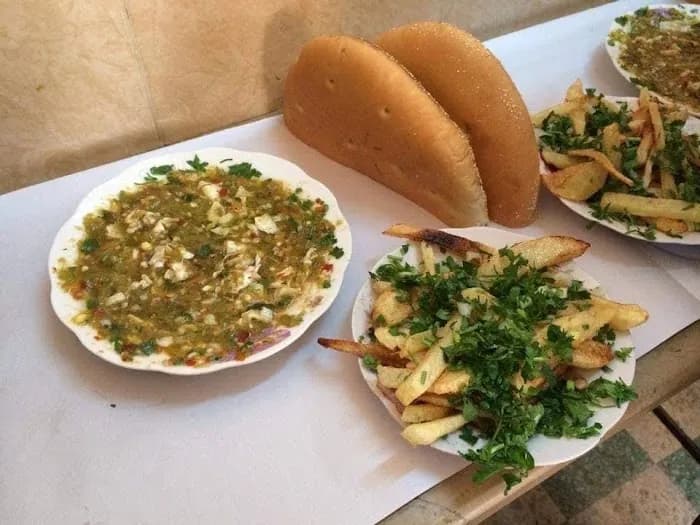
A medley of fried vegetables — peppers, tomatoes, zucchini, potatoes and chillies — finely chopped on the board and topped with an egg, a staple of Kairouan's lunch counters.
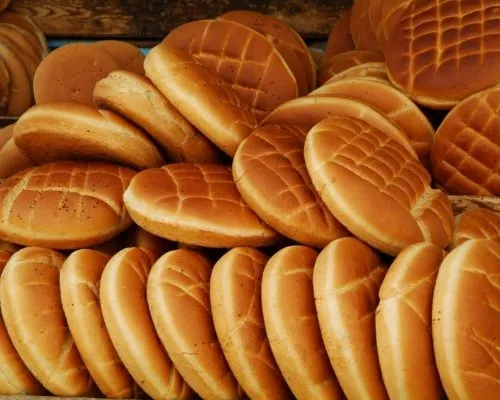
Round, golden loaf baked against the clay walls of a tabouna oven, with a soft crumb and smoky crust — the everyday bread served alongside briks, lablabi and tajines in Kairouan.
Where to eat
From fine dining to local favorites
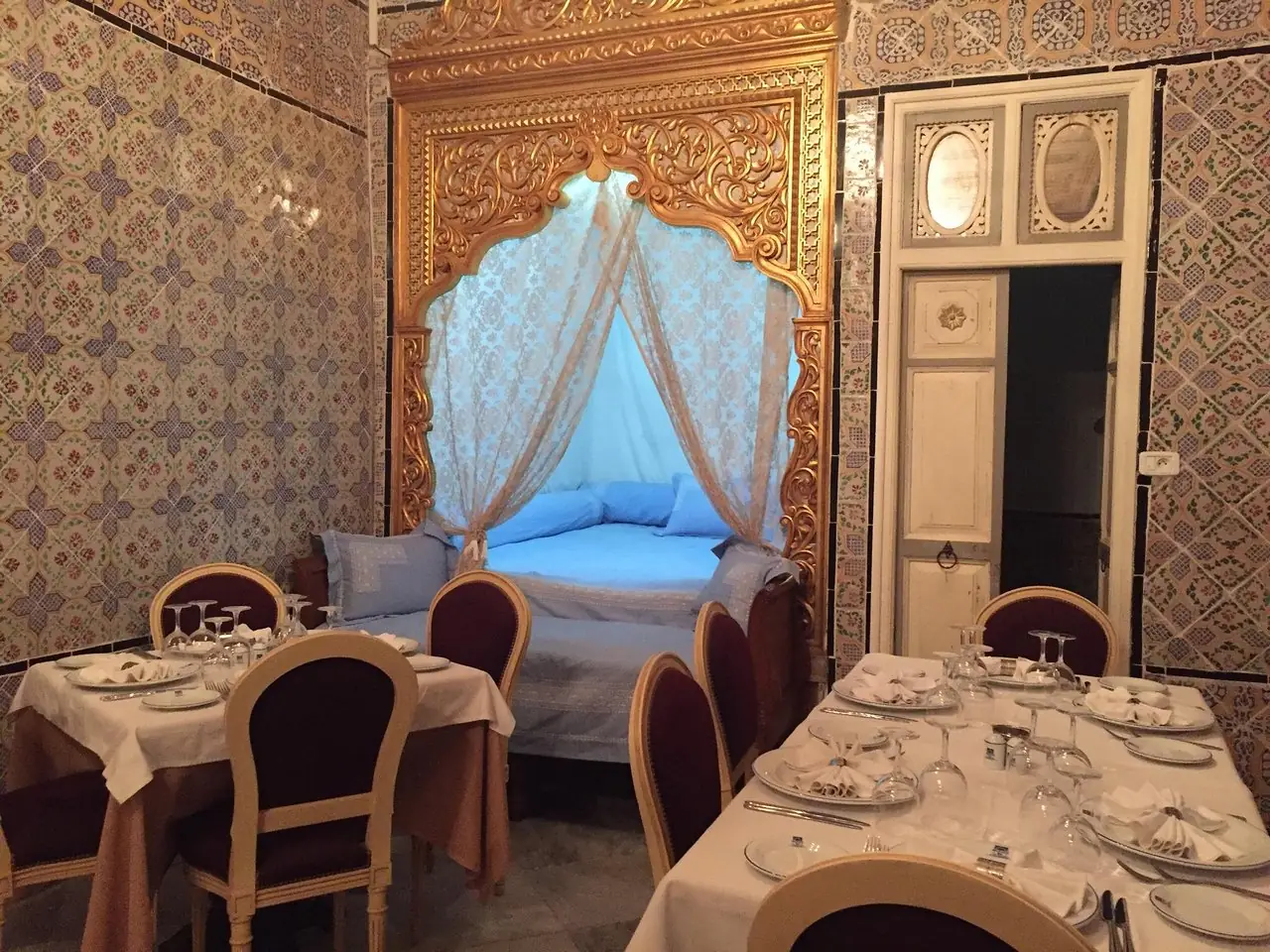
Restored traditional house in the heart of the medina, prized for its lamb couscous, briks and heritage setting.
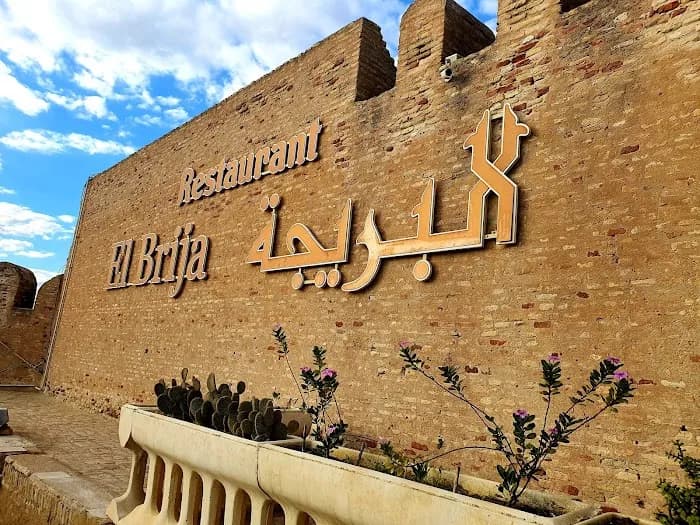
Perched on the ramparts near the Great Mosque, this tourist favourite serves fish couscous and briks from a panoramic terrace.
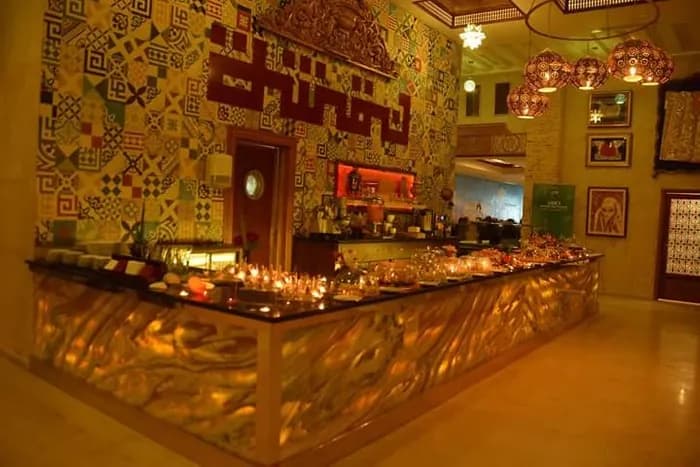
Contemporary venue on Avenue Abi Zamaa El Balaoui serving grills and Mediterranean fare in a polished setting with terrace.
Watch
A glimpse of what awaits you on the ground
Getting Around
Reaching the governorate
No direct rail service: SNCFT does not serve Kairouan, which lies off all currently operated passenger lines.
Regular departures (roughly hourly) from Bab Alioua coach station in Tunis; journey takes 2 to 2.5 hours and costs about 13–15 TND one-way.
View scheduleFastest route: A1 motorway southbound, exit at Enfidha or M'Saken, then RN2 highway westwards to Kairouan; tolls about 5–8 TND.
Once you're there
Yellow metered taxis: flag fall 0.7–1 TND then around 0.8 TND per km; in-town fares typically 3–6 TND.
Shared louage minibuses run from the main station to Tunis (~10 TND), Sousse (~5 TND), Sfax, Sbeitla and Kasserine; they leave once full.
The walled medina is best explored on foot: most major monuments lie within a fifteen-minute walk of each other.