Nº01
UNESCO Medina
More than 700 monuments — souks, mosques, palaces and madrasas — in one of the best-preserved medinas in the Arab world, on the UNESCO list since 1979.
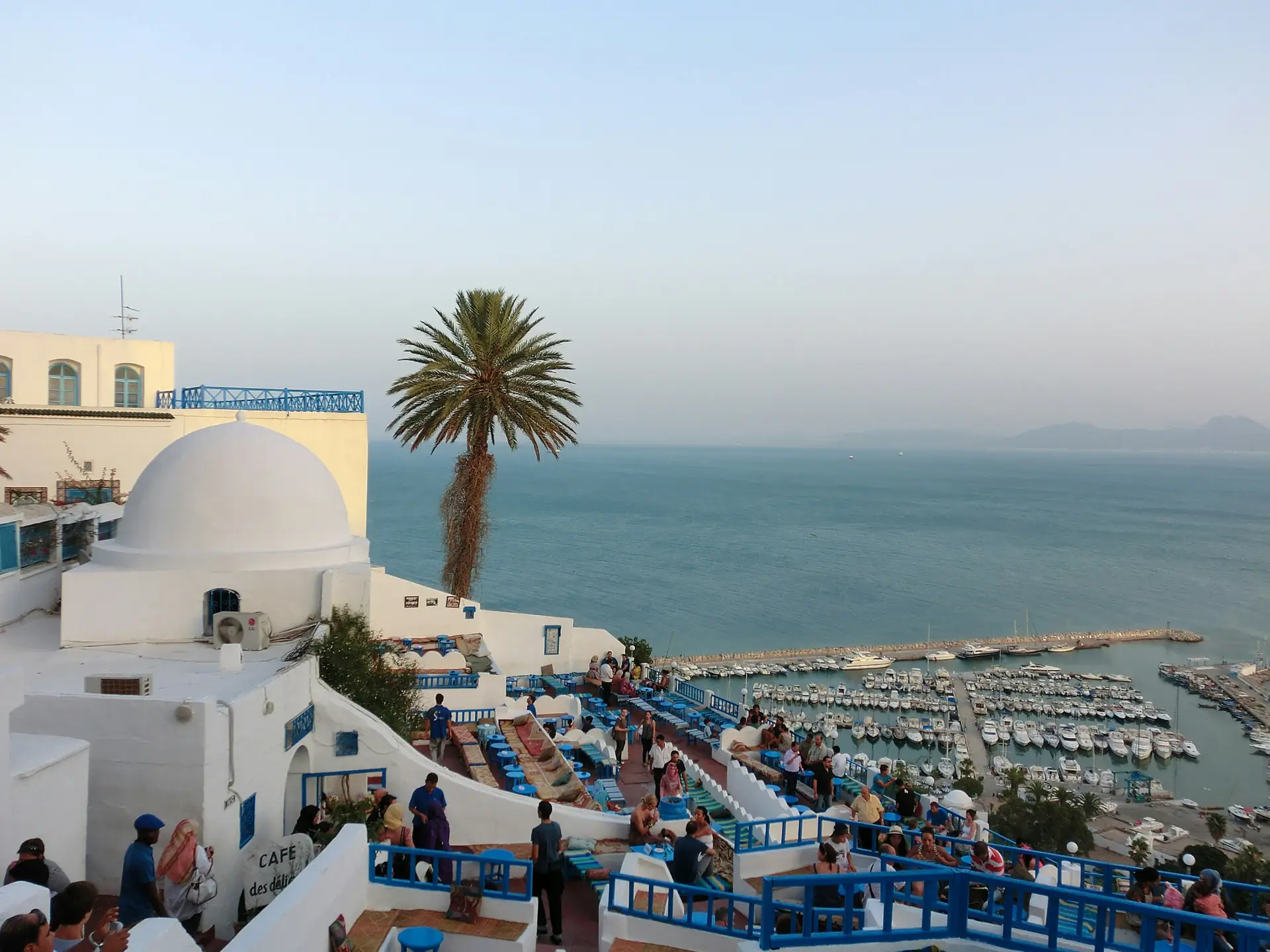
The white capital, where medina meets the Mediterranean
Cradled between the Mediterranean and the Lake of Tunis, Tunisia's capital weaves together a UNESCO-listed medina, the Punic and Roman ruins of Carthage, and the blue-and-white cliff village of Sidi Bou Saïd. The Bardo National Museum, reopened in September 2023, holds the world's largest collection of Roman mosaics, while Avenue Habib Bourguiba sets the rhythm of the modern city. Served directly by Tunis–Carthage Airport and connected to the coast by the historic TGM light rail, the governorate is the country's natural gateway and best base. Its kitchens — brik, lablabi, fish couscous — define Tunisian cuisine from medina palaces to seafront terraces in La Marsa and La Goulette.
What It's Known For
More than 700 monuments — souks, mosques, palaces and madrasas — in one of the best-preserved medinas in the Arab world, on the UNESCO list since 1979.
A UNESCO site founded in the 9th century BCE, where Punic ports, the Antonine Baths and Byrsa Hill overlook the Gulf of Tunis.
A clifftop village protected since 1915, famed for cobbled lanes, panoramic cafés and studded doors set against the Mediterranean.
Housed in a 19th-century beylical palace and reopened in 2023, the Bardo holds the world's largest collection of Roman mosaics.
Must-See Landmarks
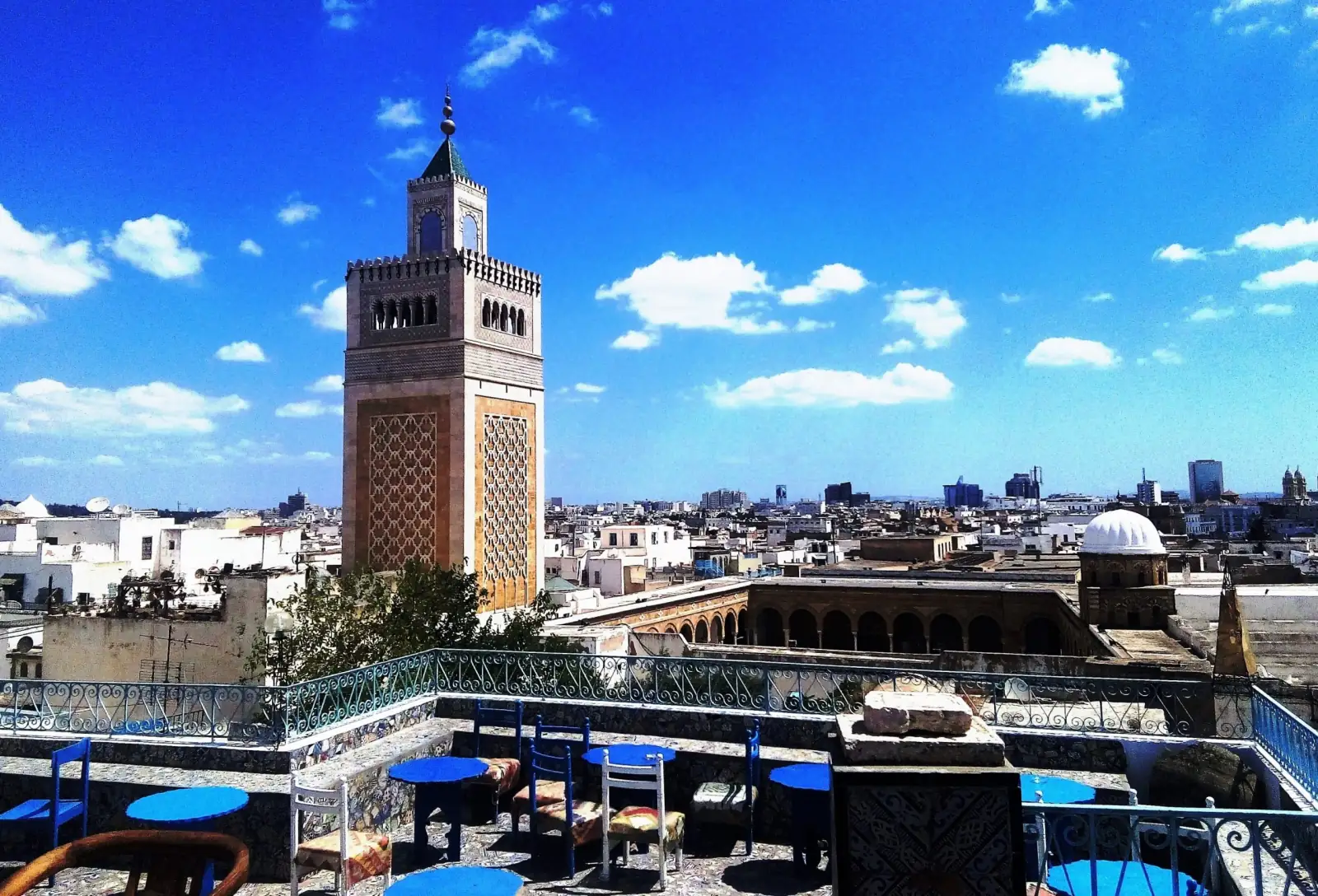
The historic heart of Tunis, inscribed by UNESCO in 1979, covering some 270 hectares with more than 700 monuments — souks, mosques, palaces and Hafsid- and Ottoman-era madrasas.
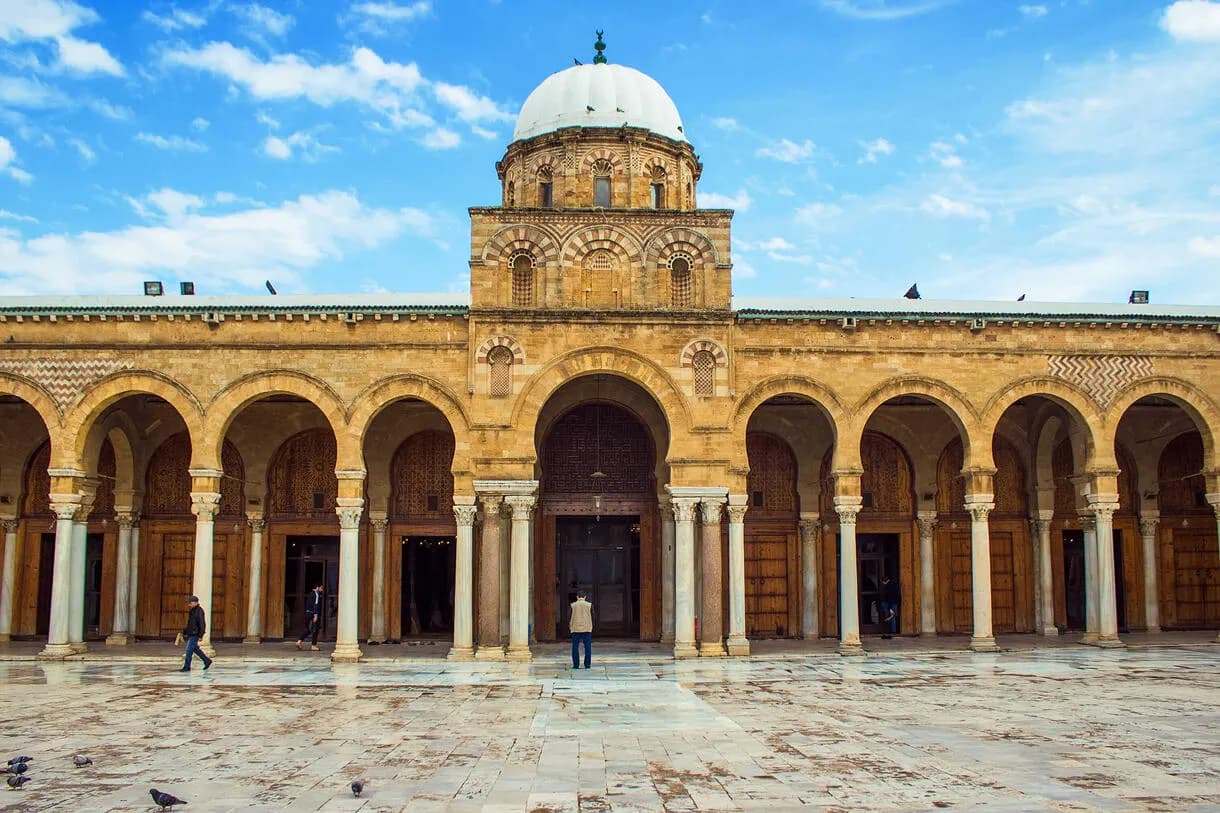
The oldest mosque in Tunis, founded in 698 CE and rebuilt in the 9th century with 160 antique columns reused from Carthage. It hosted one of the oldest Islamic universities in the world.
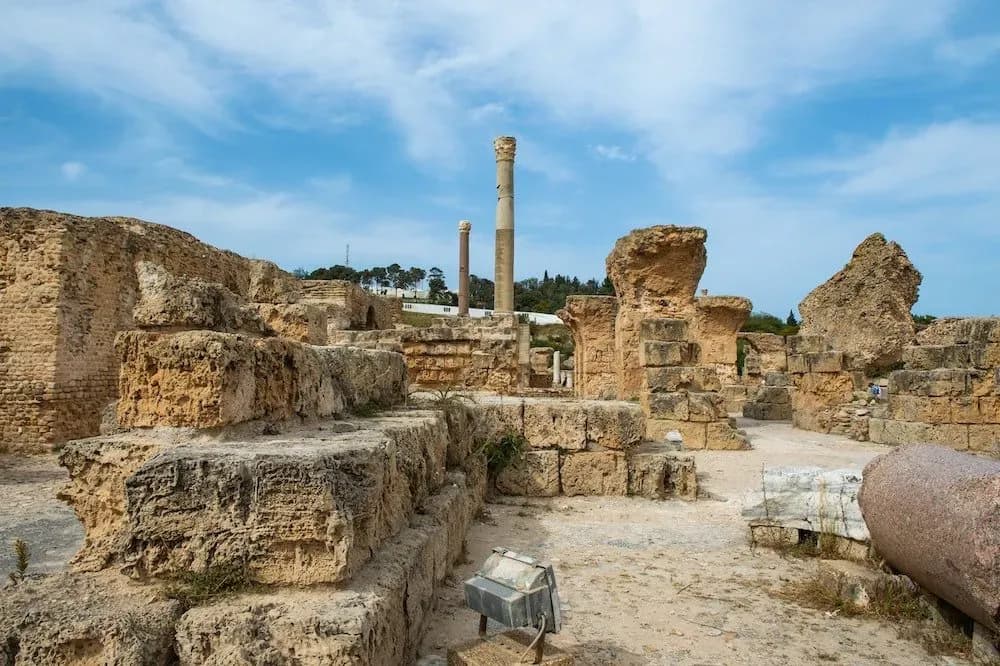
Punic capital founded in the 9th century BCE and later a major Roman metropolis, Carthage stretches along the coast with its Punic ports, baths, amphitheatre and Byrsa Hill — UNESCO-listed since 1979.
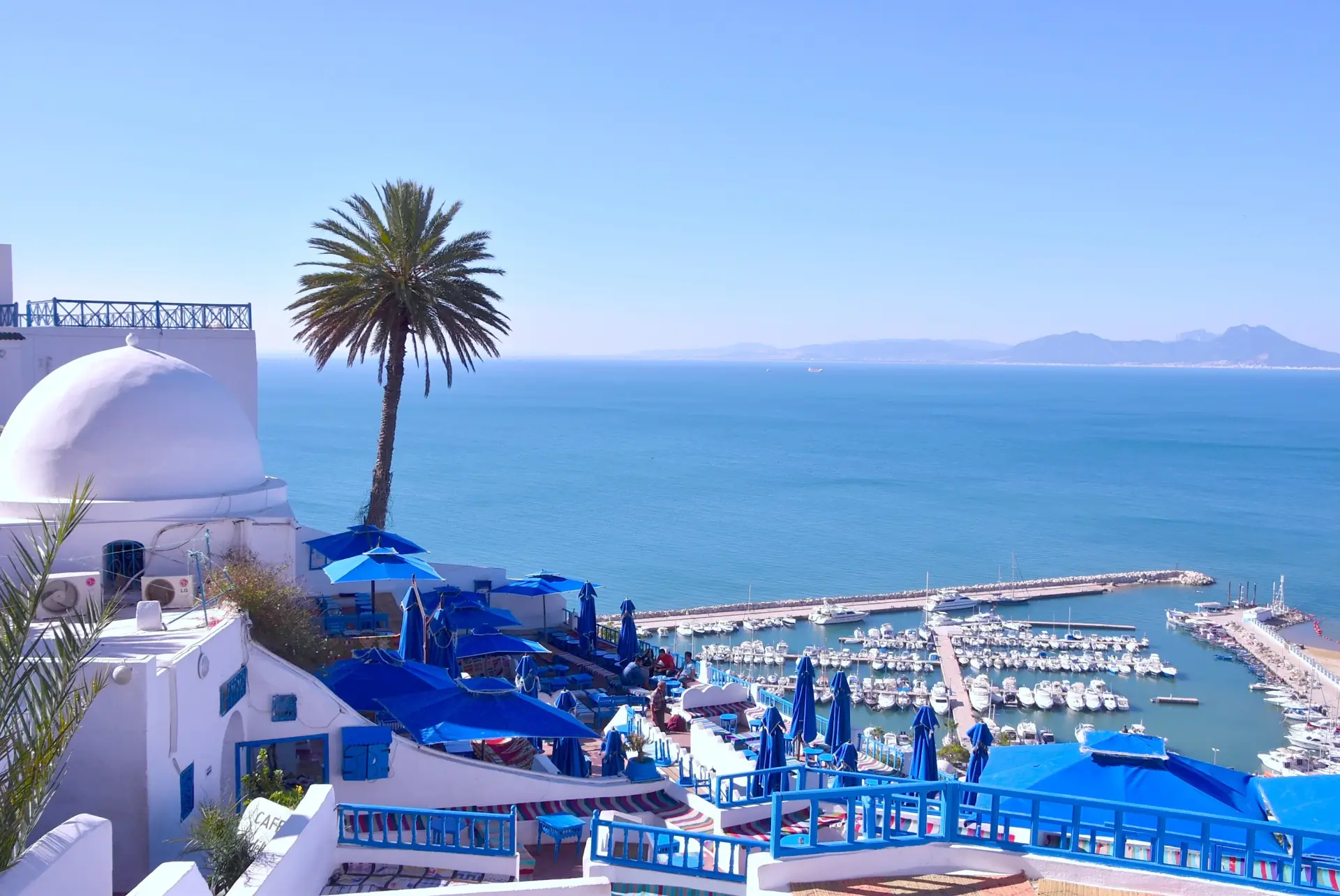
A clifftop village 130 m above the Gulf of Tunis, protected as heritage since 1915 and famed for its uniformly blue-and-white Andalusian houses, cobbled lanes and panoramic cafés.
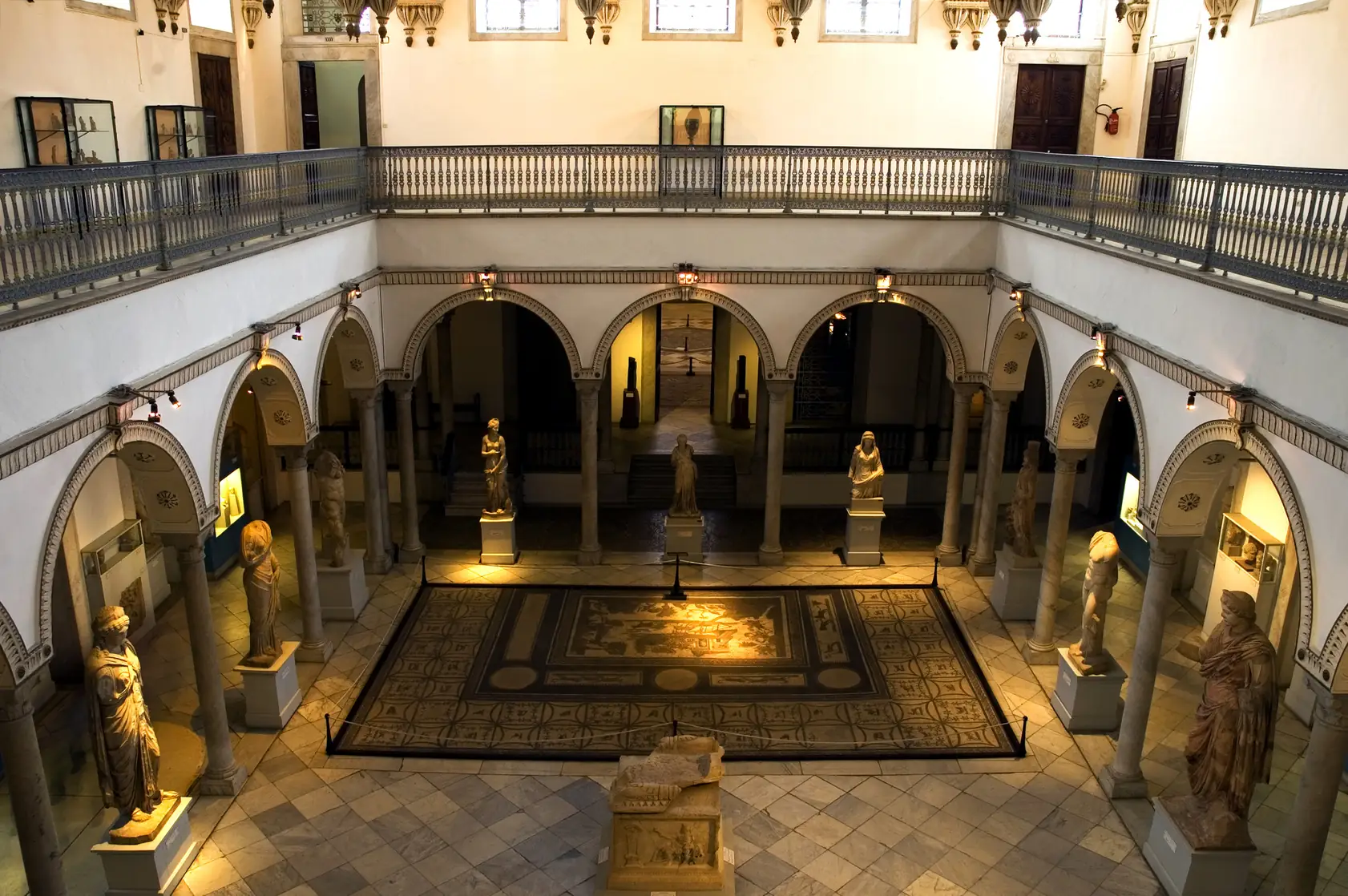
Housed in a 19th-century beylical palace and reopened in September 2023, it holds the world's largest collection of Roman mosaics alongside Punic, Christian and Islamic collections.
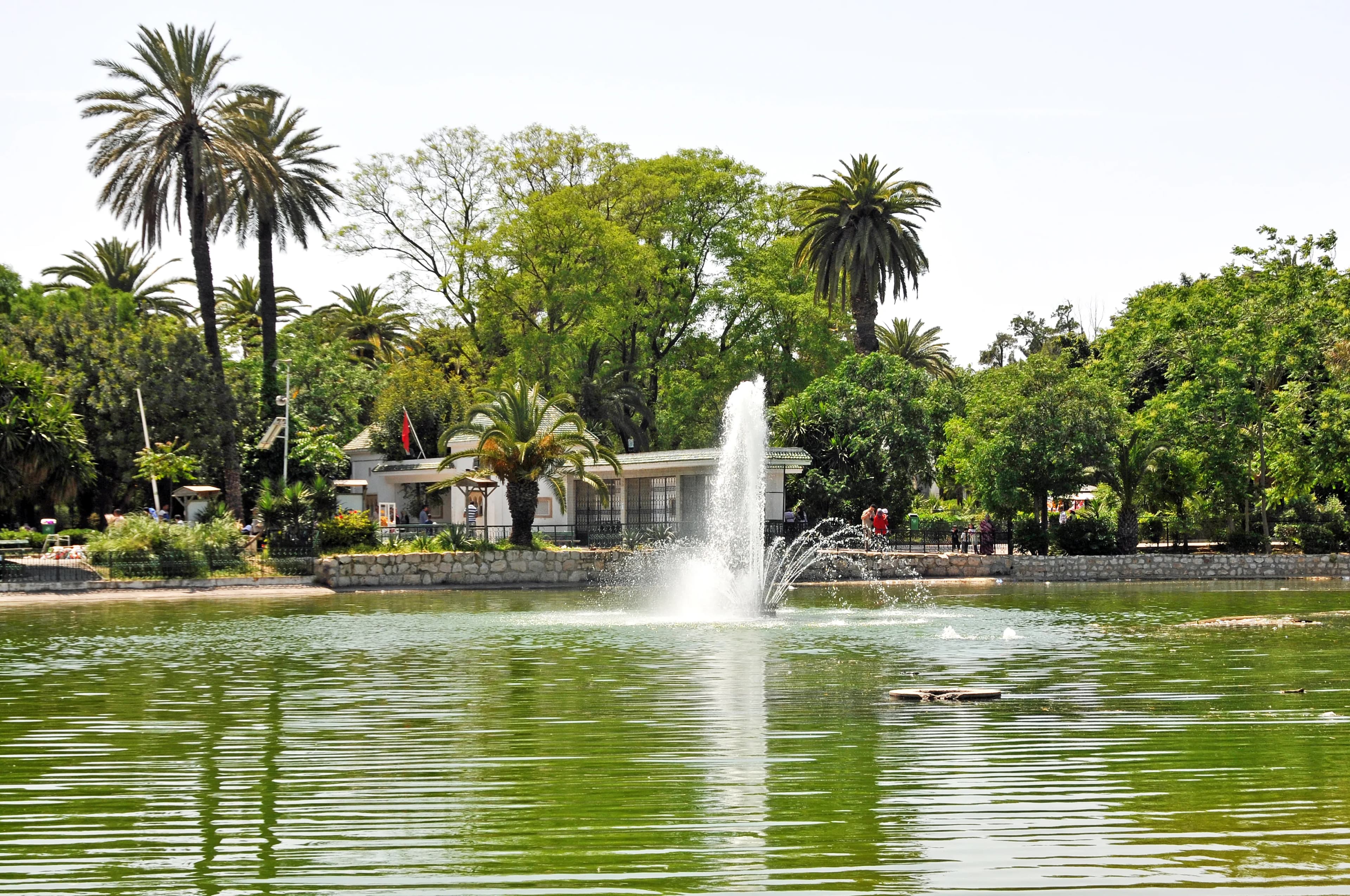
The largest urban park in Tunis (~110 ha), opened in 1892 and designed by Joseph Laforcade. It contains an artificial lake, a 17th-century Andalusian qubba, the Tunis Zoo and the Museum of Modern Art.
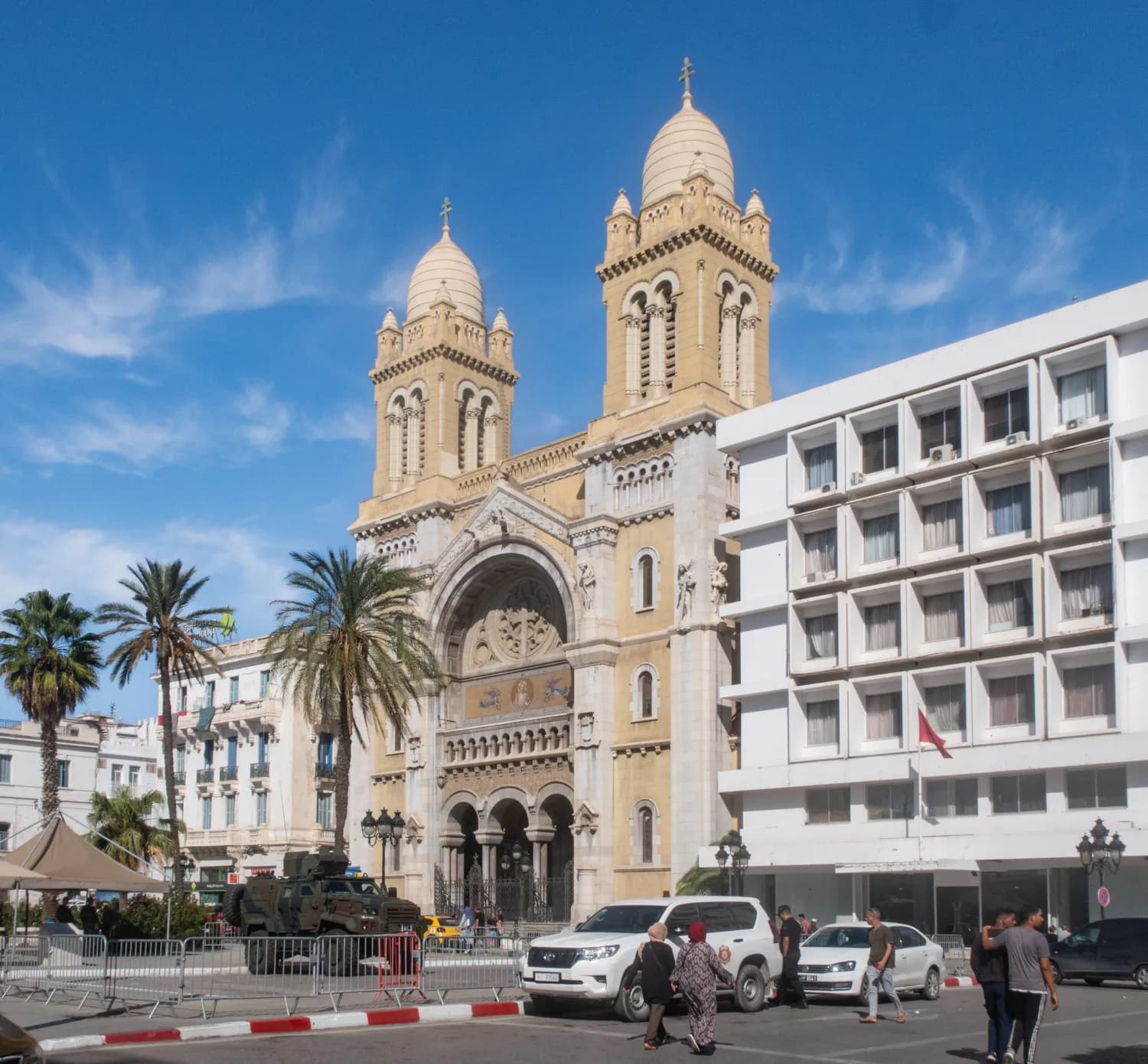
Catholic cathedral inaugurated in 1897 and seat of the Archdiocese of Tunis, blending Moorish Revival, Neo-Gothic and Neo-Byzantine styles on Place de l'Indépendance, facing Avenue Bourguiba.
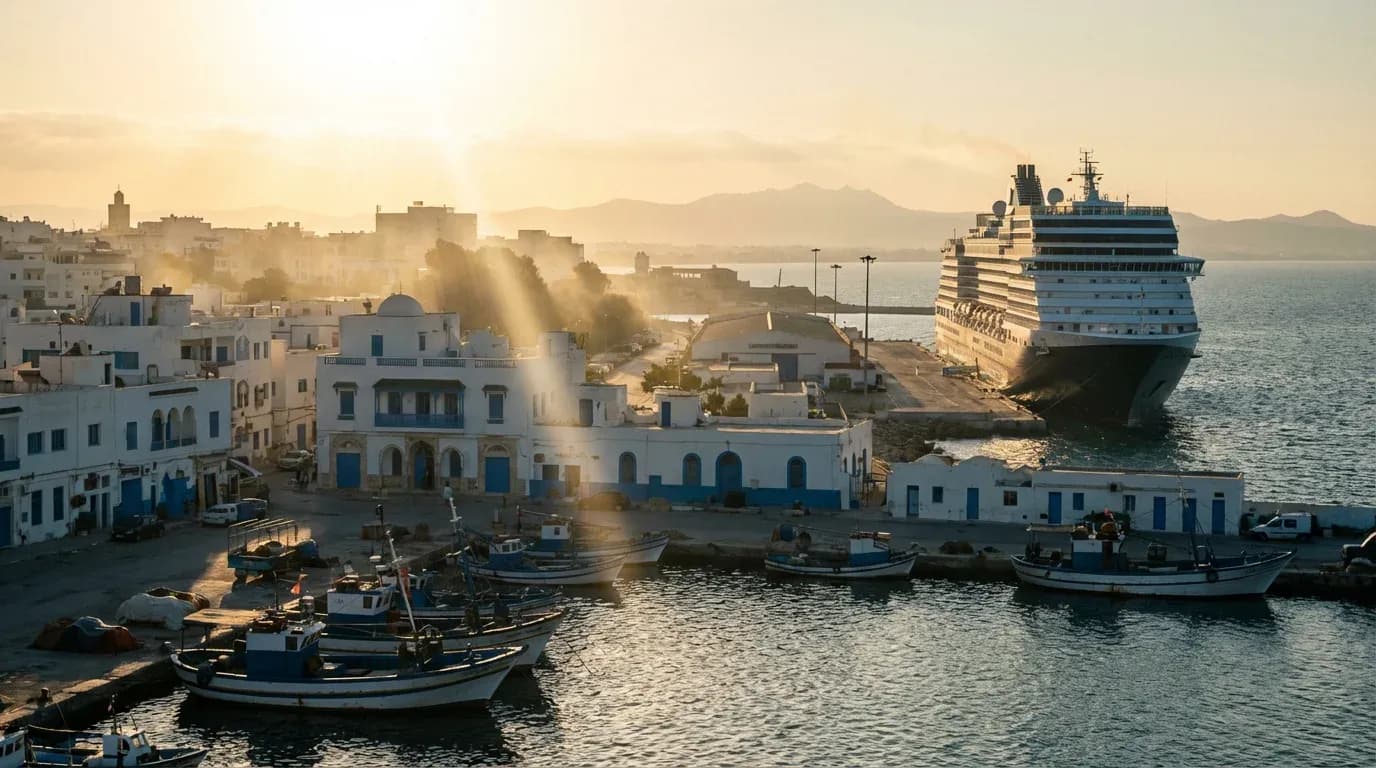
Port and seaside suburb at the entrance to the Lake of Tunis — Tunisia's main passenger ferry terminal to Europe and a summer hotspot for fish dinners, watched over by the 16th-century Borj el Karrak.
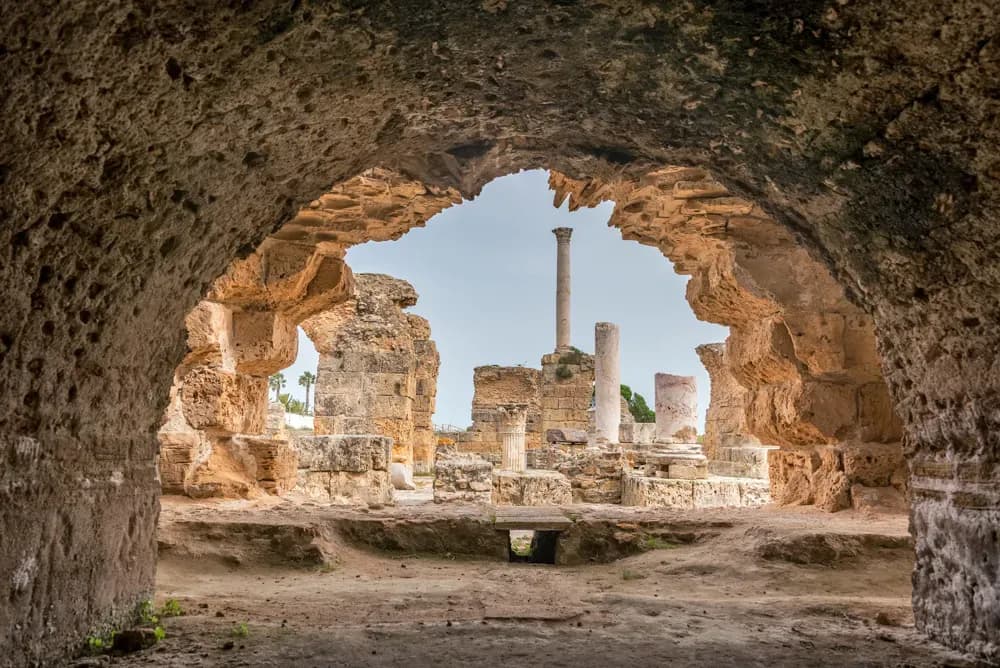
The largest Roman bath complex in Africa, built 145–165 CE under Hadrian and Antoninus Pius and destroyed by the Vandals in 439. Its dramatic substructures lie on the seafront beside the Presidential Palace.
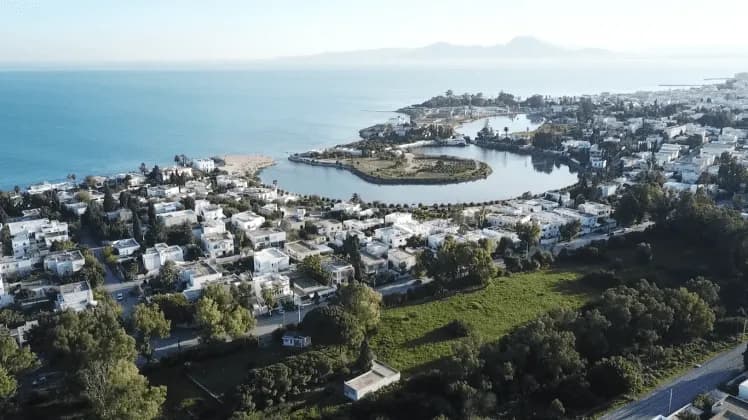
Two interconnected lagoons — a circular military cothon with its Admiralty Island once sheltering up to 220 warships, and a rectangular commercial port — masterpieces of Carthaginian naval engineering.
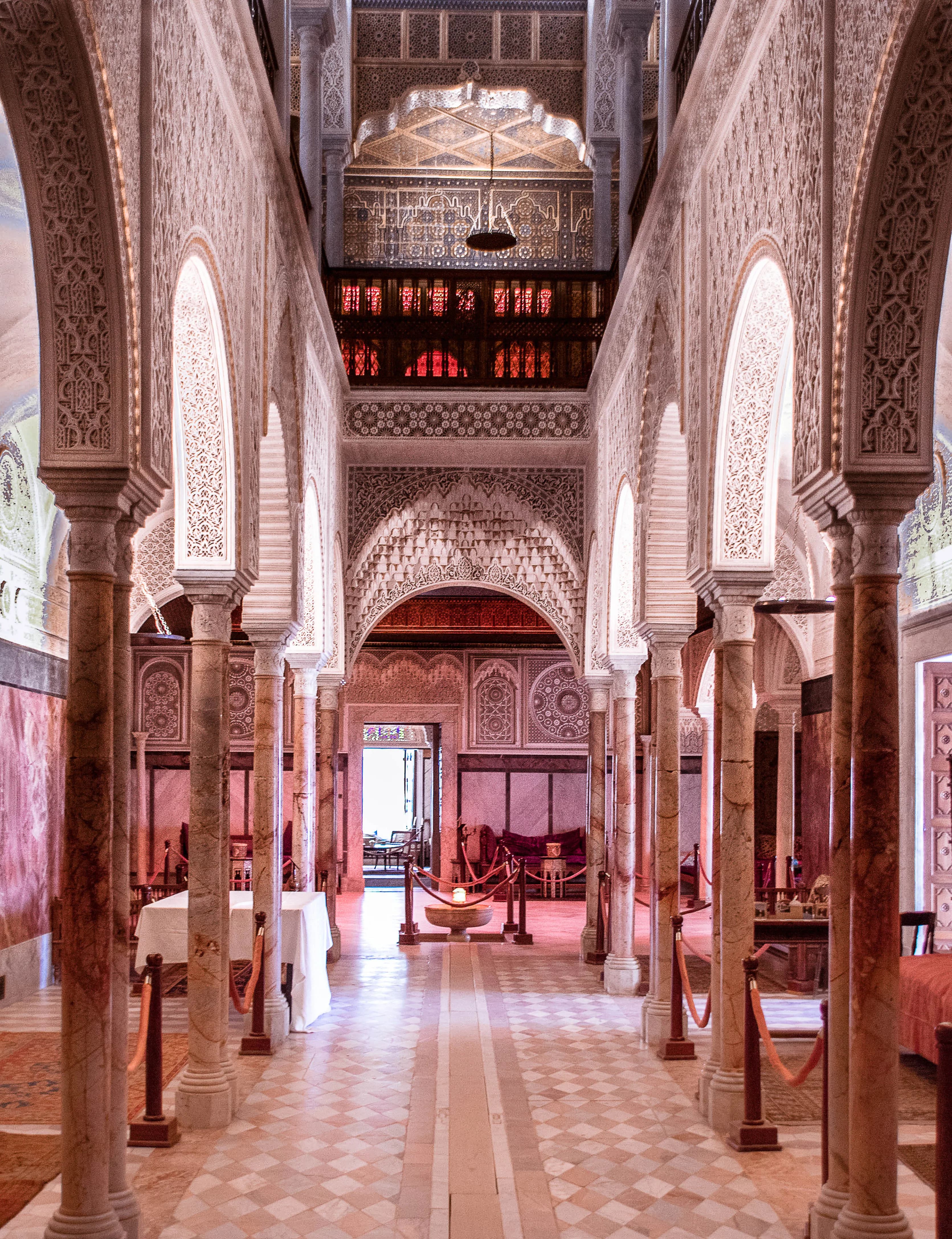
Residence of Baron Rodolphe d'Erlanger, built between 1912 and 1922 — an Arab-Andalusian masterpiece in Sidi Bou Saïd. It has housed the Centre for Arab and Mediterranean Music (CMAM) since 1991.
La Marsa's long seafront promenade, lined with cafés, ice-cream parlours and fish restaurants facing the Mediterranean — a Tunis evening ritual, popular for morning runs and summer swims.
Local flavors
Traditional dishes you must try
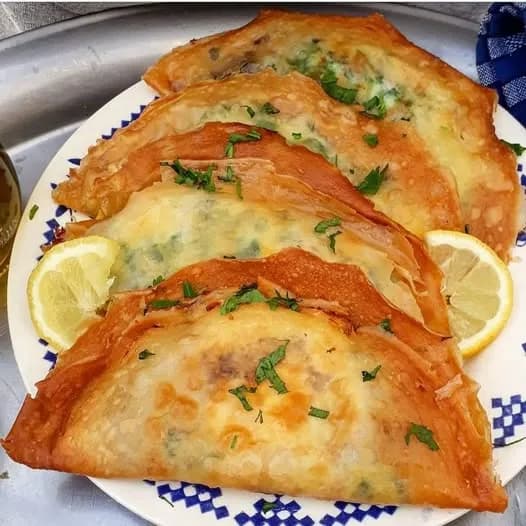
Crispy thin malsouka pastry triangle filled with a runny egg, tuna, capers and parsley, fried golden and served with a wedge of lemon.
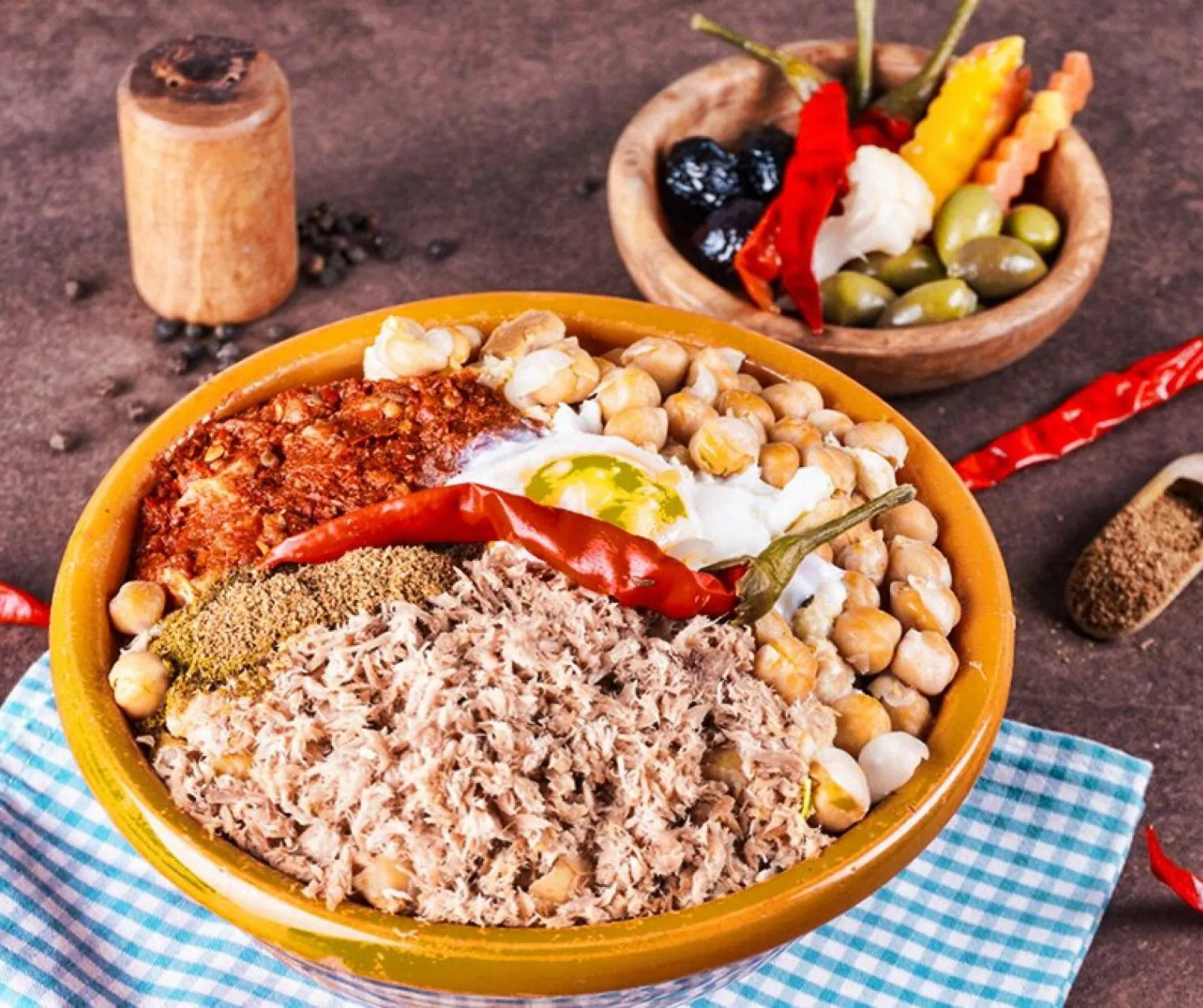
Hearty chickpea broth poured over crumbled stale bread with garlic, cumin, harissa and a poached egg — a beloved Tunis winter breakfast.
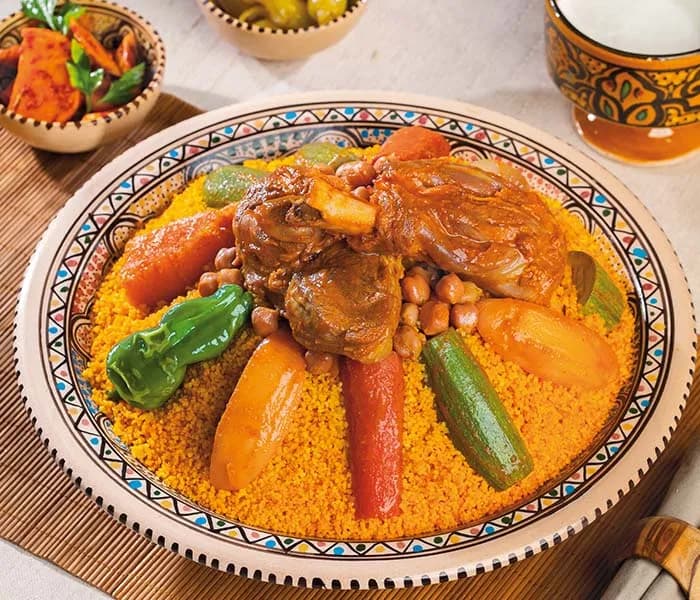
Steamed semolina served with a tomato-harissa broth, vegetables and fish such as grouper or mullet — the signature coastal Tunis variant.
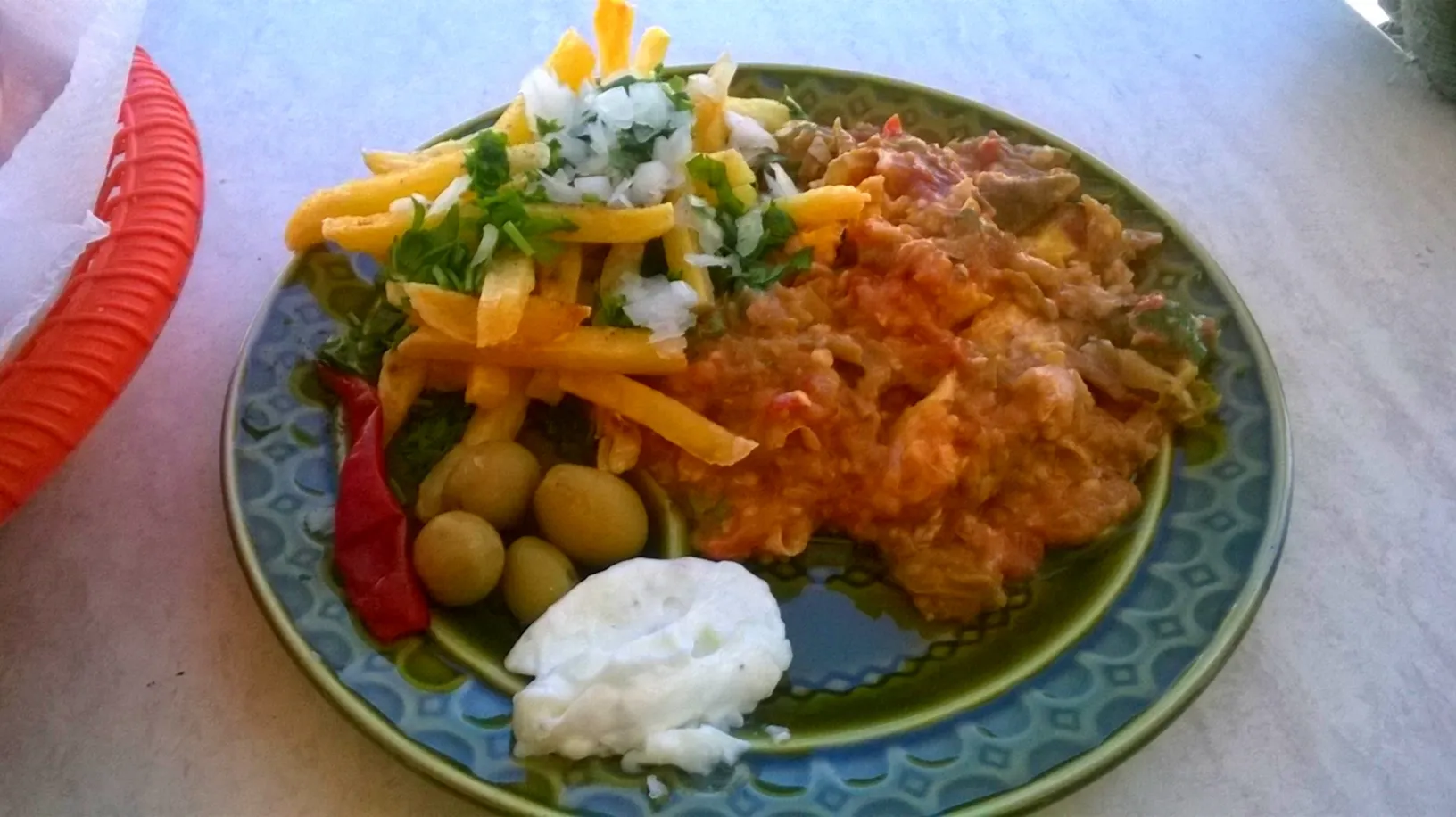
Fried peppers, courgettes, potatoes and tomatoes finely chopped together with eggs, often served with merguez sausage or liver.
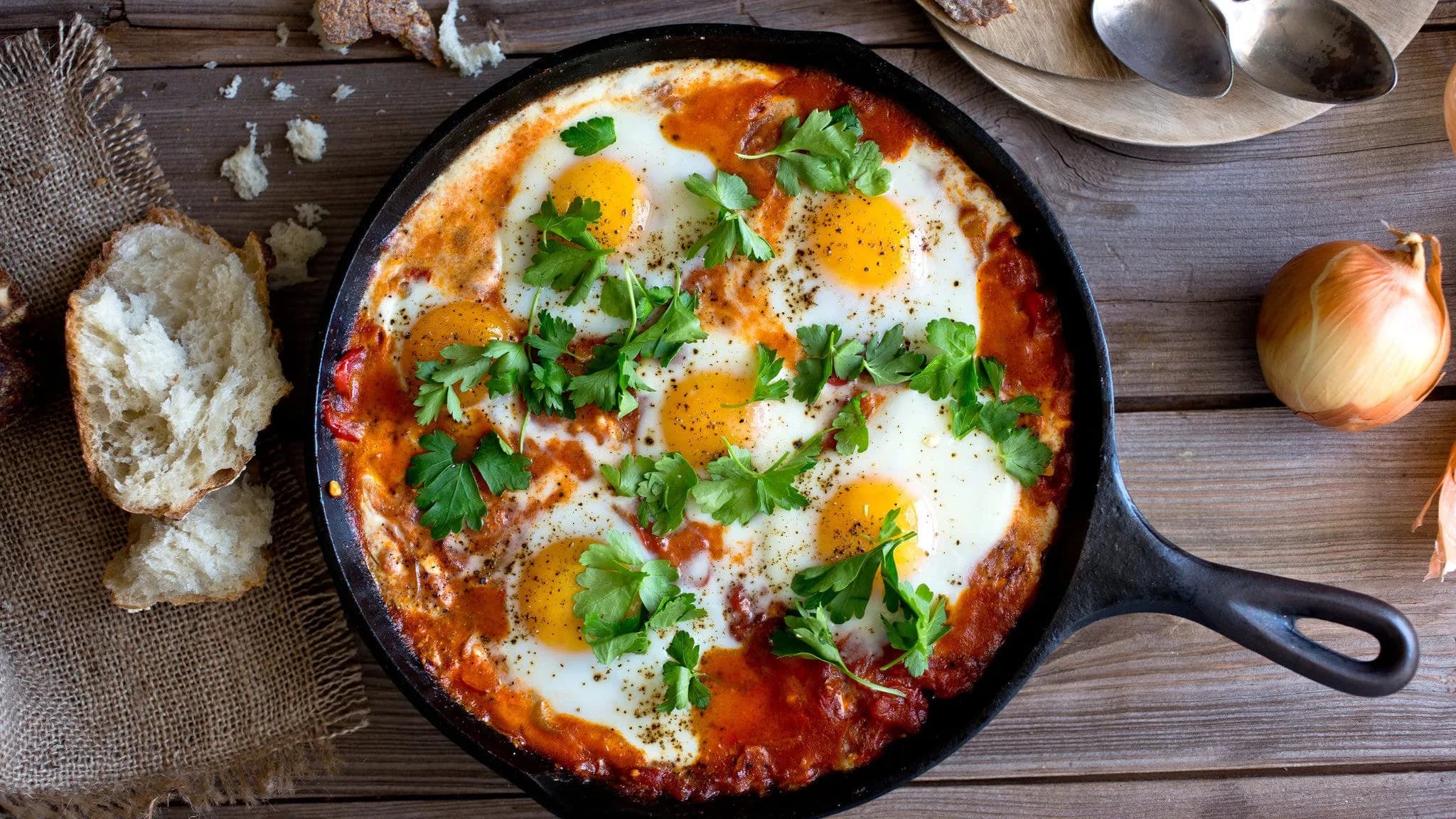
Eggs scrambled into a spicy tomato-harissa sauce flavoured with garlic, cumin and tabel, topped with merguez or shrimp.
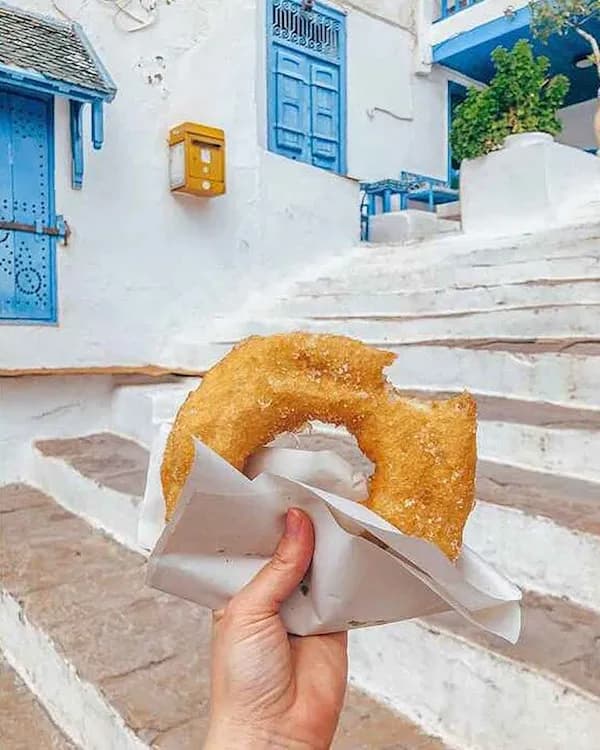
A fluffy ring-shaped doughnut deep-fried and dusted with sugar — the iconic street snack of Sidi Bou Saïd, eaten piping hot on the village square.
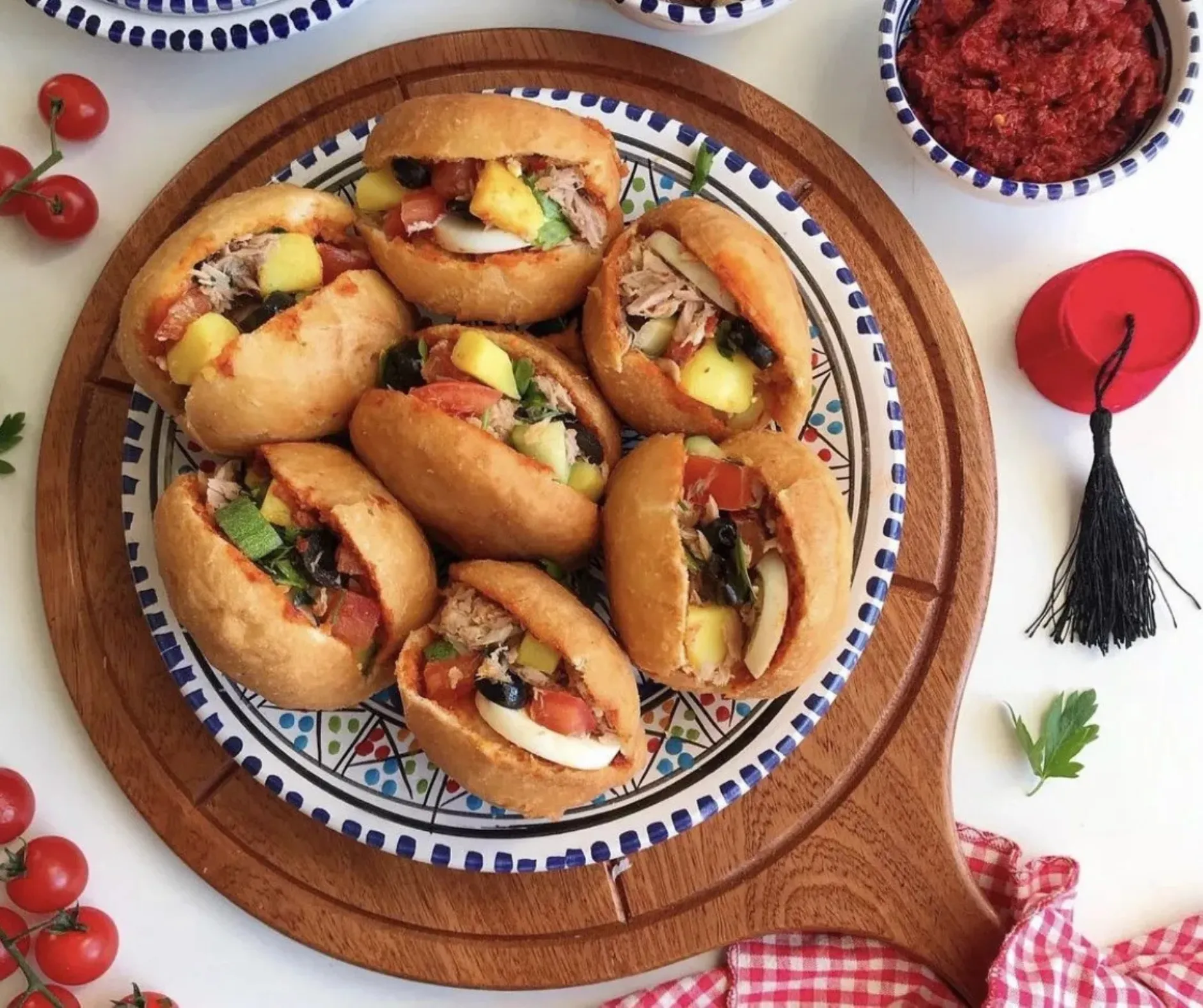
Small deep-fried savoury bun stuffed with tuna, boiled egg, potato, olives, capers and harissa — a classic Tunis street snack.
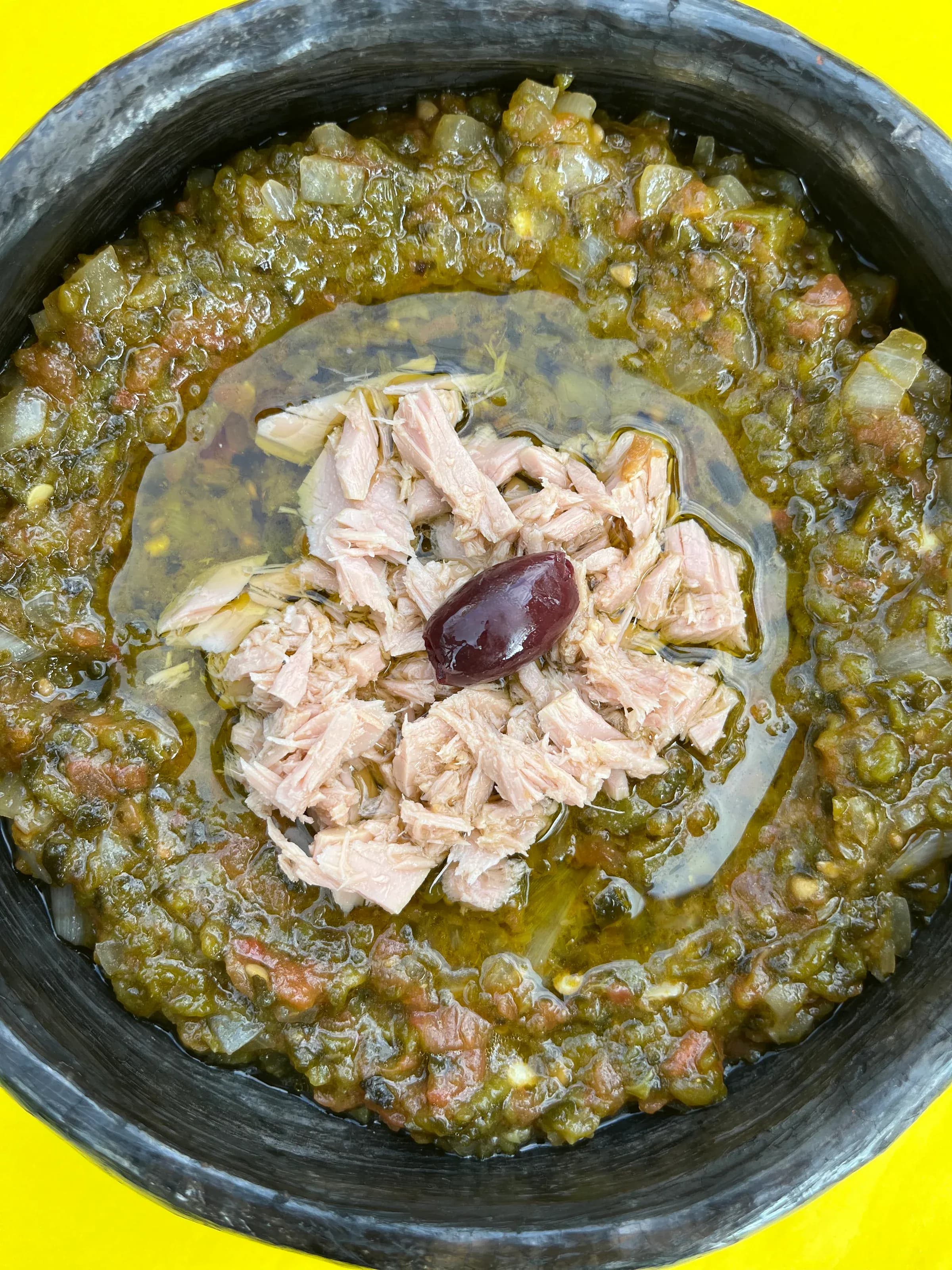
Smoky salad of fire-grilled peppers, tomatoes and chillies, finely chopped and dressed with garlic and olive oil, topped with tuna, boiled egg and olives.
Where to eat
From fine dining to local favorites
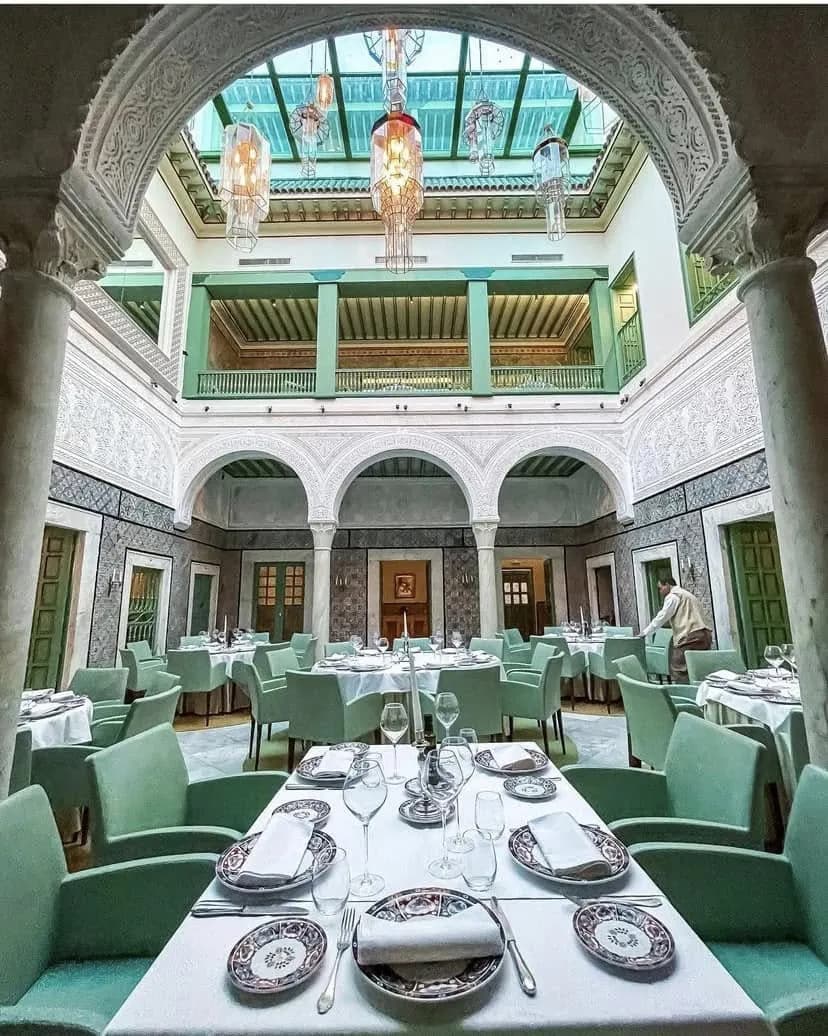
Tunis's flagship fine-dining address, set in an 18th-century mansion at the heart of the medina, with tiled courtyards and live oud music in the evenings.
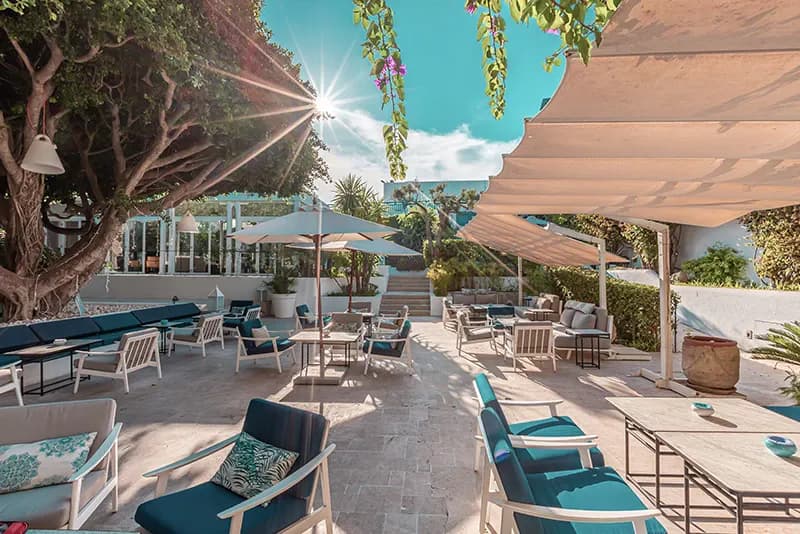
Set on the Sidi Bou Saïd hilltop with a century-old garden and a panoramic terrace above the marina, serving upscale Tunisian–Mediterranean cuisine.
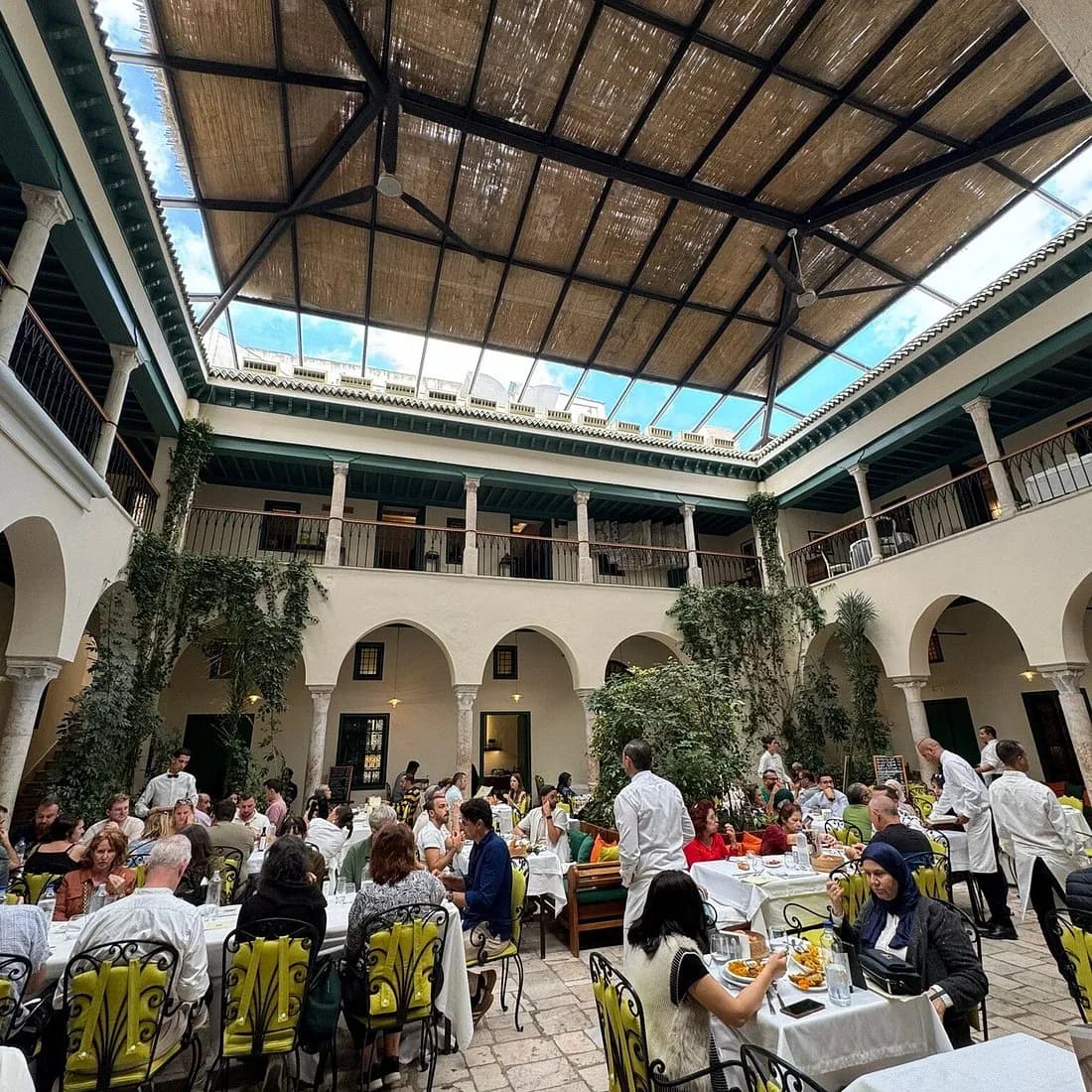
Restored Hafsid-era caravanserai in the perfumers' souk, blending refined Tunisian cuisine with a craft gallery under a glass-roofed courtyard.
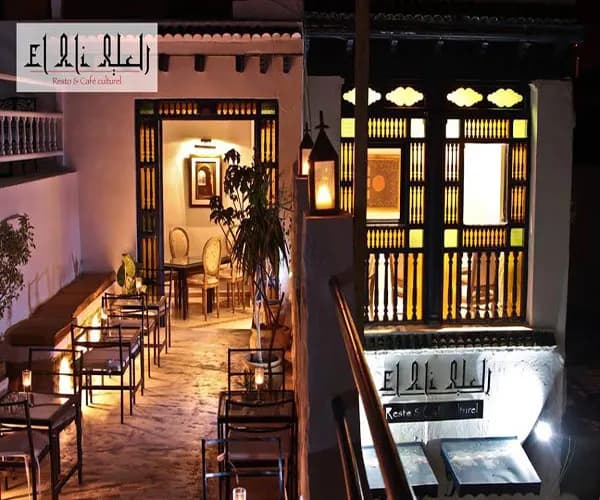
Rooftop restaurant and cultural café in a 16th-century medina house with panoramic views of the Zitouna Mosque and the Cathedral.
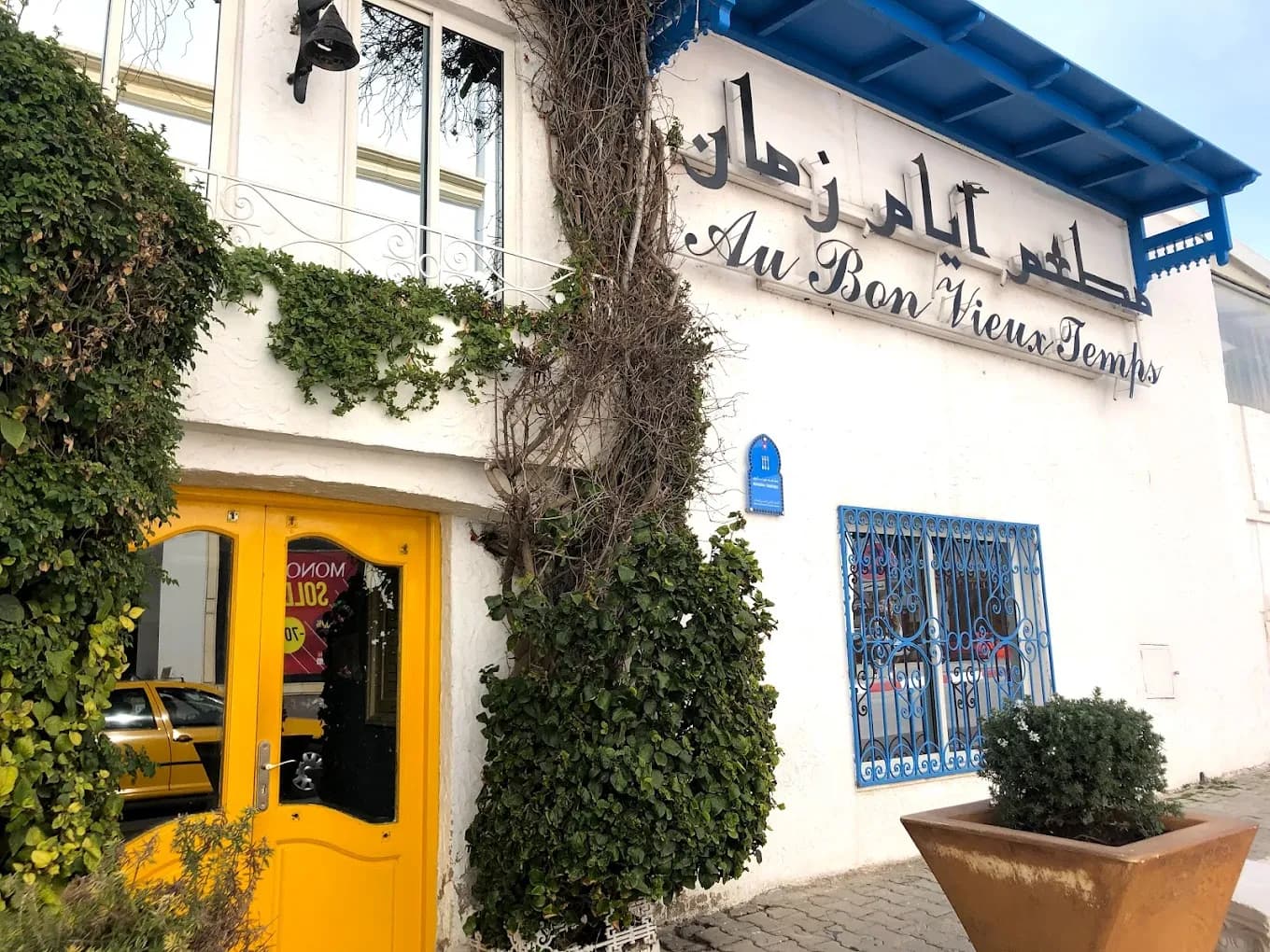
Traditional Sidi Bou Saïd house turned fine-dining restaurant, with terraces tiered toward the gulf and a menu blending Tunisian, French and Italian influences.
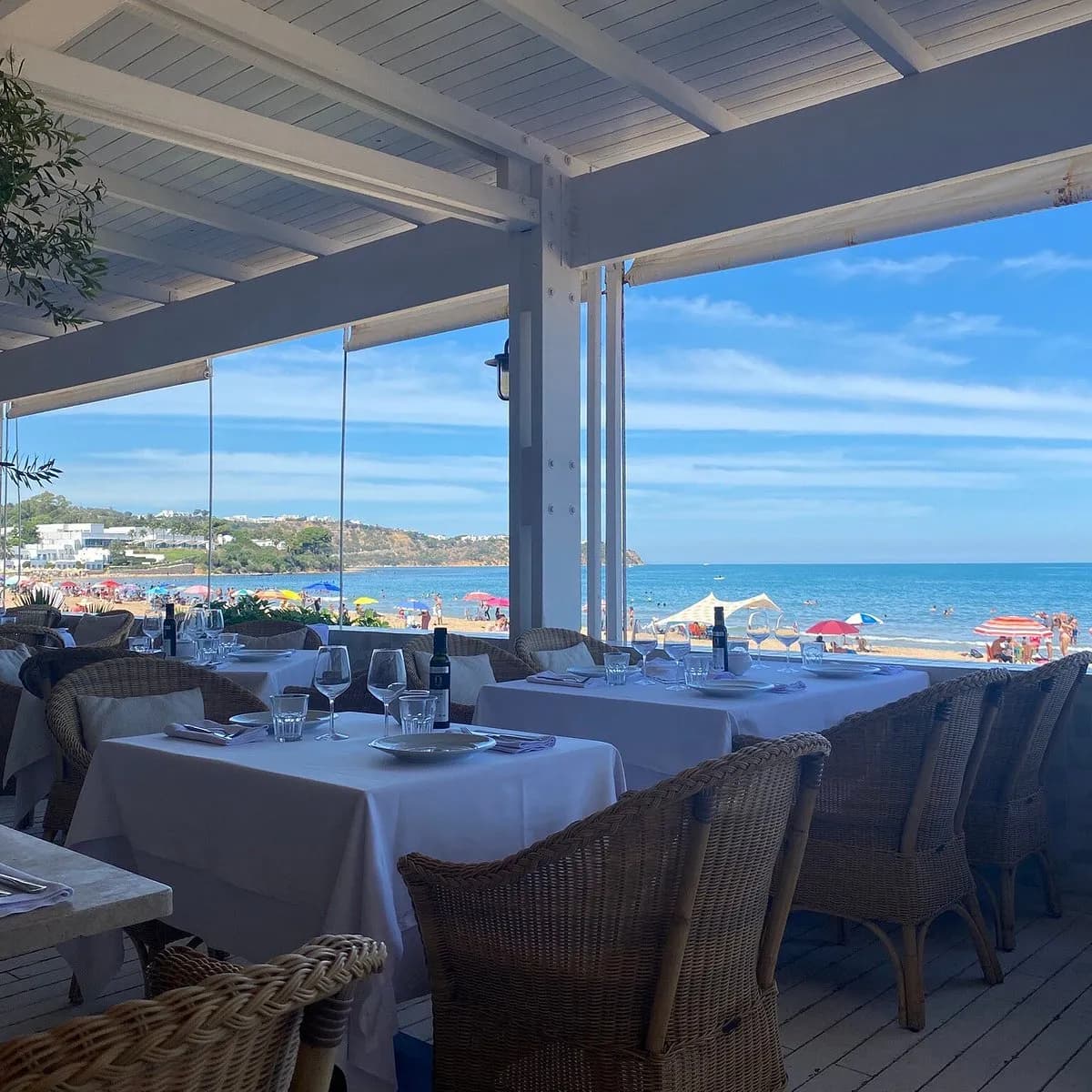
Beachfront La Marsa institution opened in 1955, with an olive-shaded dining room and a chef's table added in 2023 — featured in MENA's 50 Best Restaurants 2026.
Watch
A glimpse of what awaits you on the ground
Getting Around
Reaching the governorate
No intercity travel required; from Tunis–Carthage Airport, allow 15–25 min by taxi (≈10–15 TND with airport surcharge).
The TGM light rail links downtown (Tunis Marine) to La Goulette, Carthage, Sidi Bou Saïd and La Marsa in 20–35 min.
Dense TRANSTU urban network; no louage needed to stay within the governorate.
Once you're there
19 km, 18 stations, every 10–20 min from ~04:00 to ~00:30. The go-to line for Carthage and Sidi Bou Saïd. Track works in 2025 between La Goulette and Kheireddine may affect service.
45.2 km and 66 stations, run by TRANSTU from ~4:30 to ~22:30. Africa's largest light-rail network; Line 4 reaches Le Bardo museum.
Official rate unchanged since December 2022. Always insist on the meter; from the airport, flag a taxi on the Departures level rather than the official queue.
Dense urban and suburban network; tickets at kiosks or onboard, often very crowded at rush hour.
Three main stations: Bab Alioua (south), Moncef Bey (north), Bab Saadoun (west). The 8-seat minibus leaves only when full; cash only.